
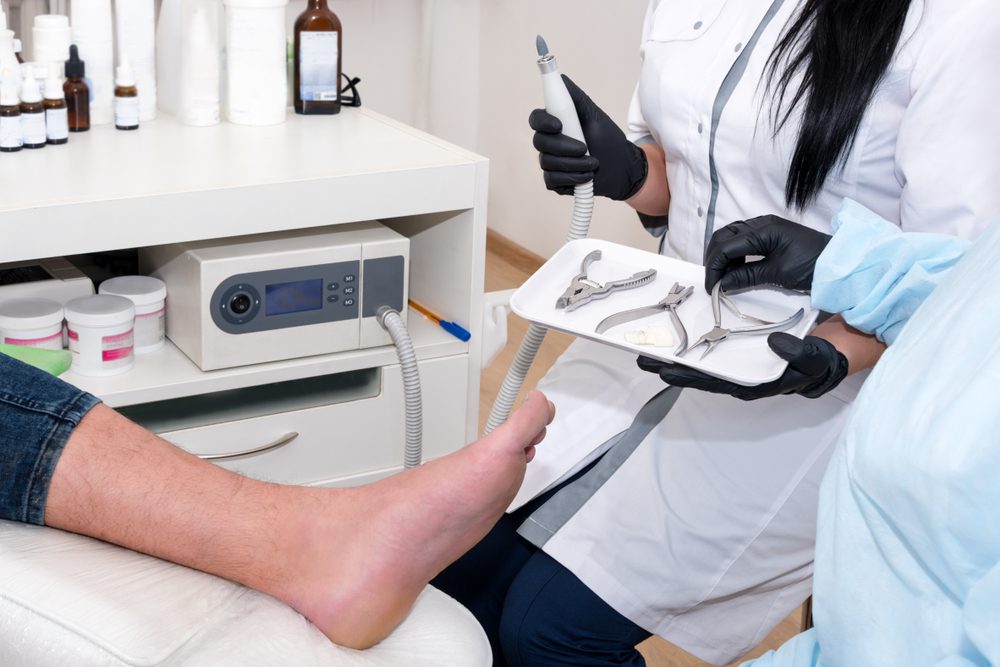
Podiatrists serve as dedicated medical specialists for the foot and lower leg, and they provide a range of treatments. Because foot anatomy is intricate, these doctors typically undergo years of rigorous training. They diagnose foot ailments, and they create personalized treatment plans for patients. This is how a podiatrist treats ingrown toenails:
Evaluate Nail
The doctor first inspects the affected toe for signs of acute infection. If pus is present, the podiatrist notes the extent of the inflammation. The evaluation determines the approach, so an accurate assessment remains a top priority. The provider checks pedal pulses to verify adequate blood flow to the feet.
An X-ray reveals if the infection has reached the tuft of bone. The podiatrist cleanses the skin, and they inject a local anesthetic carefully. While the toe becomes numb, the staff typically prepares all necessary sterile instruments. Numbing the toe prevents pain during the removal of the nail border.
Vaporize Nail With Laser
Some clinics use modern laser therapy to remove the ingrown nail edge. The beam vaporizes the nail, and it leaves the healthy skin intact. Because lasers are precise, they target only the problematic nail sliver effectively. This precision helps to reduce trauma to the surrounding soft tissue structures quite.
As the laser fires, it evaporates the hard keratin of the nail. The procedure is quick, but the doctor must control the laser carefully. The laser energy destroys the nail plate without cutting the adjacent skin. No scalpel touches the toe during this specific type of nail removal.
Heat from the laser beam cauterizes small blood vessels almost instantly. Since the laser seals nerve endings, patients experience less postoperative throbbing later. This action minimizes bleeding, and it keeps the surgical field very clean. Recovery times typically decrease because the tissue sustains less physical damage overall.
Destroy Nail Matrix if Needed
Recurrent ingrown nails may require the destruction of the underlying nail matrix. The doctor applies a chemical, and this acid kills the nail root. Because the matrix dies, that section of nail never grows back again. Phenol is a typical chemical used for this permanent correction method.
Bandage Area
The assistant applies a layer of antibiotic ointment over the treated wound. Before you leave the clinic, you receive specific instructions for home care. They apply sterile gauze, and they secure it with a cohesive bandage. Proper bandaging keeps the site clean while the tissue begins healing properly with these steps:
- Keep the dressing dry.
- Wear open-toed sandals.
- Apply medication daily.
- Avoid tight socks.
It is wise to follow all aftercare instructions carefully to ensure proper healing. You should avoid strenuous activities that may put pressure on the treated area. While the wound heals, if you notice signs of infection such as redness, swelling, or unusual pain, contact your healthcare provider immediately to address any concerns.
Visit a Podiatrist Today
Ingrown toenails create discomfort that hinders your daily movement and regular activities. Expert treatment aims to resolve the pain, and it restores your foot health quickly. If you ignore the problem, you may risk infection. Contact a local podiatrist to schedule your foot evaluation appointment today.
