
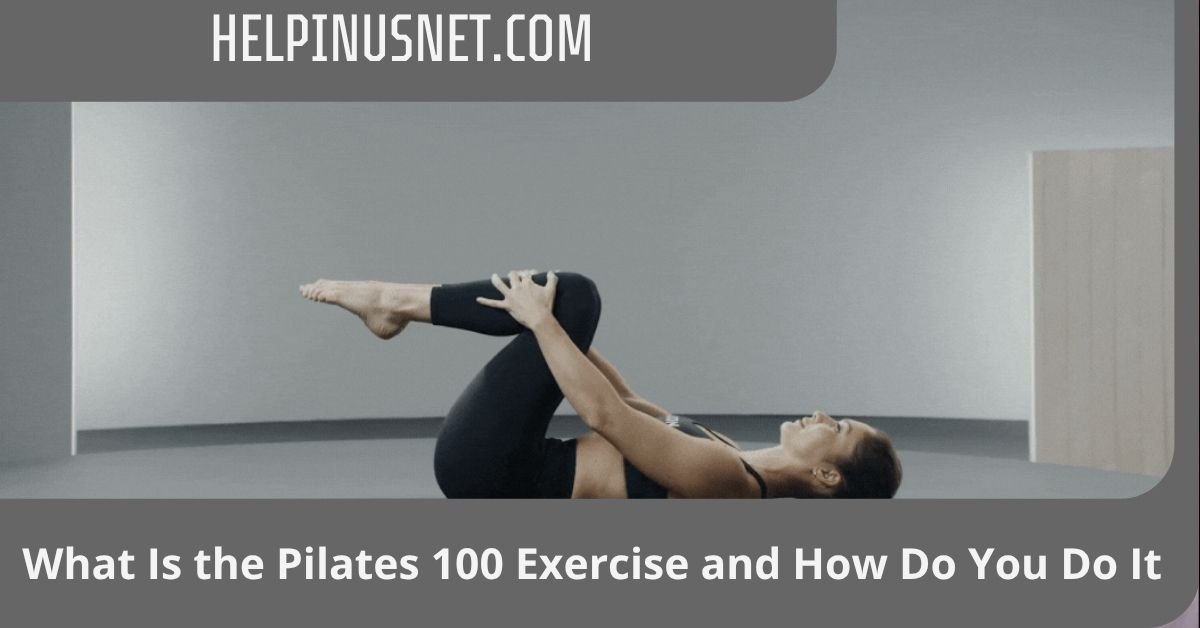
The Pilates 100 exercise is one of the best-known movements in classical Pilates. It is often introduced early in Pilates programs because it combines breathing, abdominal control, coordination, and steady movement in one exercise.
Despite its simple name, the Pilates 100 exercise can be challenging. The exercise asks you to maintain a controlled body position while moving your arms rhythmically and breathing in a specific pattern. For beginners, the goal is not simply to reach 100 arm pumps. Good technique, comfortable breathing, and proper body control matter more than completing the full number.
This guide explains what the Pilates 100 exercise is, how to do it, what muscles it uses, its potential benefits, common mistakes, beginner modifications, and ways to include it in a balanced workout.
What Is the Pilates 100 Exercise?
The Pilates 100 exercise is a classic Pilates mat exercise that combines a supported abdominal position with repeated arm pulses and rhythmic breathing.
The name comes from the traditional goal of performing 100 small arm pumps. A common classical breathing pattern involves five counts while inhaling and five counts while exhaling. Ten breathing cycles can therefore produce 100 arm pumps.
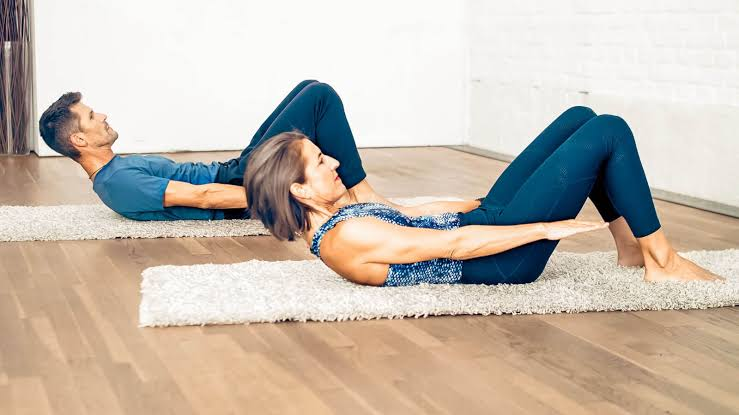
The movement usually begins with the person lying on their back. The legs may be bent or extended depending on the version and the person’s ability. The head and upper shoulders are lifted, the arms reach forward, and the arms pulse up and down in a small, controlled range.
The Pilates 100 is not primarily an arm exercise. The arm movement is relatively small. The main challenge is maintaining trunk stability while coordinating breathing and movement.
For this reason, the exercise is often considered a Pilates core exercise.
Why Is It Called the Pilates 100?
The number 100 refers to the traditional target of 100 arm pumps.
A typical counting pattern is:
- Inhale for 5 arm pumps.
- Exhale for 5 arm pumps.
- Repeat the pattern 10 times.
- Total: 100 arm pumps.
However, beginners do not need to perform all 100 pumps.
Doing 20, 30, 40, or 50 controlled pumps can be a better starting point. The quality of the movement is more important than reaching a specific number.
This is an important point because trying to complete 100 repetitions with poor form can make the exercise less useful and less comfortable.
Pilates 100 Exercise at a Glance
| Feature | Description |
| Exercise type | Pilates mat exercise |
| Main focus | Core control and breathing |
| Position | Usually lying on the back |
| Main movement | Small repeated arm pumps |
| Traditional target | 100 arm pumps |
| Equipment | Usually none |
| Difficulty | Beginner to advanced, depending on variation |
| Primary areas involved | Abdominals, hip flexors, shoulders, arms, breathing muscles |
| Main skill | Coordinating breathing with controlled movement |
What Is the Purpose of the Pilates 100?
The main purpose of the Pilates 100 is to practice coordinated breathing, abdominal engagement, and trunk stability while the arms move continuously.
It can also serve as a warm-up or early exercise in a Pilates session because it encourages awareness of the core and breathing pattern.
The exercise may help you practice:
- Maintaining a stable torso
- Coordinating movement with breathing
- Keeping the abdominal muscles active
- Developing muscular endurance
- Improving body awareness
- Controlling arm movement without excessive tension
- Maintaining a steady exercise rhythm
It should not be viewed as a magic exercise for getting a flat stomach or losing belly fat. No single exercise can selectively remove fat from one area of the body.
How to Do Pilates 100 Exercise
Learning how to do Pilates 100 exercise correctly is more important than immediately trying to complete 100 pumps.
Follow these basic steps.
Step 1: Lie on Your Back
Start on a comfortable exercise mat.
Lie on your back with your knees bent and feet resting on the floor. Keep your spine in a comfortable, neutral position.
Relax your shoulders and place your arms beside your body.
Step 2: Prepare Your Breathing
Before lifting into the exercise, take a comfortable breath.
Think about breathing into your rib cage rather than forcing your stomach outward. Avoid holding your breath.
Pilates breathing should feel controlled rather than strained.
Step 3: Lift the Legs if Appropriate
For a more traditional version, bring your legs into a tabletop position.
Your hips and knees are approximately bent to 90 degrees, with your lower legs parallel to the floor.
If this position is difficult, keep your feet on the floor.
Step 4: Lift the Head and Shoulders
Gently lift your head and upper shoulders from the mat.
Your neck should remain long. Avoid pulling your head toward your chest.
Imagine that the upper part of your back is curling slightly forward while your neck remains relaxed.
If this creates neck discomfort, keep your head on the mat.
Step 5: Extend the Arms
Reach your arms forward.
They should be roughly parallel to the floor or slightly higher, depending on your body position and comfort.
Keep the shoulders away from the ears.
Step 6: Begin the Arm Pumps
Move both arms up and down in small, controlled pulses.
The movement should come from the shoulders and arms without swinging.
You do not need a large range of motion.
Small, steady movements are the goal.
Step 7: Coordinate Your Breathing
A traditional pattern is:
- Inhale for 5 pumps.
- Exhale for 5 pumps.
Continue this pattern while maintaining control.
If counting makes your breathing uncomfortable, use a natural breathing rhythm instead.
Step 8: Stop at an Appropriate Number
Beginners can stop after 20 or 30 pumps.
As your control improves, you can gradually increase the number.
Eventually, you may work toward the traditional 100 pumps.
Step 9: Return to the Starting Position
Lower your head and shoulders with control if they are lifted.
Bring your legs back to the floor if they are elevated.
Take a few relaxed breaths before continuing with your workout.
Pilates 100 Exercise Breathing Pattern
Breathing is one of the most important parts of the Pilates 100.
The traditional pattern uses five arm pumps during an inhale and five during an exhale.
For example:
- Inhale: pumps 1–5.
- Exhale: pumps 6–10.
- Inhale: pumps 11–15.
- Exhale: pumps 16–20.
Continue until you reach your desired number.
The exact breathing pattern can be adjusted for individual needs. If a five-count breath feels uncomfortable, do not force it.
The exercise should not cause breathlessness simply because you are trying to follow a traditional counting method.
Pilates 100 Ab Exercise: What Muscles Does It Work?
The Pilates 100 ab exercise is commonly associated with the abdominal muscles, but several muscle groups contribute to the movement.
Rectus Abdominis
The rectus abdominis is the muscle commonly associated with the “six-pack.” It helps control the trunk during the exercise.
Transverse Abdominis
The transverse abdominis is a deeper abdominal muscle. It contributes to abdominal and trunk stability.
The Pilates 100 encourages controlled abdominal engagement rather than repeatedly bending and straightening the spine.
Obliques
The internal and external obliques help stabilize the torso.
Although the Pilates 100 does not involve large twisting movements, these muscles can contribute to maintaining control.
Hip Flexors
The hip flexors may work when the legs are held in tabletop or extended.
This is one reason some people feel the front of the hips working during the exercise.
Feeling some hip-flexor involvement is not automatically a sign of incorrect technique. However, strong discomfort or cramping may mean that the position should be modified.
Shoulders and Arms
The arm pumps involve the shoulder and arm muscles.
Because the movement is small, the purpose is not to build large arm muscles. Instead, the exercise challenges endurance and coordination.
Breathing Muscles
Controlled breathing involves the diaphragm and muscles of the rib cage.
The breathing pattern is an important part of the exercise rather than an optional addition.
Pilates 100 Exercise Benefits
The Pilates 100 exercise benefits are related mainly to core endurance, breathing coordination, muscular control, and body awareness.
Here are some potential benefits when the exercise is performed appropriately.
1. It Trains Core Endurance
The Pilates 100 requires the trunk to remain controlled for an extended period.
This can train endurance in the abdominal and supporting muscles.
Core endurance is different from maximum strength. The exercise is more about maintaining controlled muscular activity than producing a very large force.
2. It Encourages Breathing Coordination
The Pilates 100 links movement and breathing.
This can help beginners become more aware of how they breathe during exercise.
Learning to breathe steadily while moving may also make other exercises feel more organized.
3. It Builds Movement Awareness
Pilates places a strong emphasis on controlled movement.
During the Pilates 100, you have to think about your:
- Head position
- Shoulder position
- Rib cage
- Abdominal control
- Leg position
- Arm movement
- Breathing rhythm
This makes it a useful exercise for practicing body awareness.
4. It Develops Muscular Endurance
Because the arms pulse repeatedly and the body position is maintained, the exercise can challenge muscular endurance.
Endurance can be useful for maintaining posture and performing everyday physical activities.
5. It Can Be Done Without Equipment
One advantage of the Pilates 100 is its simplicity.
You generally need only a comfortable surface or Pilates mat.
That makes it convenient for home workouts, classes, travel, and short exercise sessions.
6. It Can Be Modified for Different Fitness Levels
The exercise can be made easier or harder by changing the position of the legs, head, and shoulders.
This makes it adaptable to different experience levels.
7. It Can Prepare You for Other Pilates Exercises
The Pilates 100 can introduce concepts that appear throughout Pilates, including:
- Core engagement
- Breath control
- Neutral alignment
- Spinal control
- Concentration
- Coordinated movement
It can therefore act as a foundation for more advanced exercises.
Does the Pilates 100 Burn Belly Fat?
The Pilates 100 can use energy and work the abdominal muscles, but it does not specifically burn belly fat.
Fat loss occurs when the body uses more energy than it takes in over time, and where fat is lost first varies between individuals.
Exercise can support healthy weight management, but it is not possible to choose exactly where the body loses fat.
If your goal is overall fitness or weight management, combine Pilates with a balanced diet and other forms of physical activity such as walking, cycling, swimming, resistance training, or other enjoyable exercises.
Also Read: How Many Calories Does Low Impact Cardio Trampoline Burn?
Is the Pilates 100 Good for Beginners?
Yes, the Pilates 100 can be appropriate for beginners when it is modified to match their current ability.
The most beginner-friendly version keeps the knees bent and feet supported on the floor.
A beginner can also keep the head and shoulders on the mat.
The goal is to learn the breathing and arm movement before adding more challenging positions.
A useful progression is:
- Feet on the floor.
- Tabletop legs.
- Head and shoulders lifted.
- Legs gradually moved farther away from the body.
- Traditional full variation when comfortable.
There is no requirement to progress through every stage.
Beginner Pilates 100 Modification
If the traditional position feels too difficult, try this version.
Lie on your back with your knees bent and feet flat on the floor.
Gently engage your abdominal muscles.
Keep your head and shoulders on the mat.
Reach your arms toward the ceiling or forward.
Begin small arm pumps while breathing comfortably.
Perform 20 to 30 pumps.
Rest.
This version allows you to learn the basic movement without placing as much demand on the abdominal muscles and neck.
Pilates 100 With Feet on the Floor
Keeping the feet on the floor is one of the easiest ways to reduce the difficulty.
This position provides more support for the body.
It may be particularly useful if you are new to Pilates or if holding the legs in tabletop causes excessive tension in the hips or abdomen.
Once the basic movement feels controlled, you can experiment with lifting the legs.
Pilates 100 With Tabletop Legs
The tabletop variation increases the challenge.
Lie on your back and lift your knees so that they are positioned above your hips.
Keep your lower legs roughly parallel to the floor.
Perform the arm pumps while maintaining a stable torso.
Do not allow the lower back to move excessively if that makes the position uncomfortable.
If you cannot maintain control, return your feet to the floor.
Pilates 100 With Extended Legs
Extending the legs away from the body makes the exercise harder.
The farther the legs move away from the torso, the greater the challenge to maintain trunk control.
Do not extend the legs farther than you can manage while maintaining comfortable alignment and breathing.
For many people, a smaller leg angle is a better choice than forcing the legs low.
Common Pilates 100 Exercise Mistakes
The Pilates 100 looks simple, but several common mistakes can reduce the quality of the exercise.
Lifting the Head Too High
Some people try to curl the head toward the knees.
This can increase neck tension.
Instead, think about lengthening the back of your neck and lifting the upper shoulders only as much as you can control.
Pulling the Chin Into the Chest
Your chin should not be aggressively pressed into your chest.
Keep the neck long and relaxed.
Moving the Arms Too Much
Large arm swings are unnecessary.
Use small, rhythmic movements.
Holding the Breath
Holding your breath defeats one of the main purposes of the exercise.
If you cannot maintain comfortable breathing, reduce the difficulty.
Dropping the Legs Too Low
Lower legs create greater leverage demands on the trunk.
If your back becomes uncomfortable or you cannot maintain control, raise the legs or place your feet on the floor.
Tightening the Shoulders
Do not allow your shoulders to creep toward your ears.
Think about keeping the shoulders relaxed while the arms move.
Chasing the Number 100
Completing 100 pumps is not more important than using good technique.
Thirty controlled pumps can be more useful than 100 rushed or uncomfortable repetitions.
How Many Pilates 100 Reps Should You Do?
There is no universal number that every person should perform.
A beginner may start with 20 to 30 arm pumps.
Someone with more experience may use 50 to 70.
The traditional goal is 100.
A simple progression might look like this:
| Level | Suggested pumps |
| New to Pilates | 20–30 |
| Beginner | 30–50 |
| Intermediate | 50–80 |
| Advanced | Up to 100 |
These numbers are general examples, not medical or fitness prescriptions.
Your appropriate number depends on your technique, fitness level, comfort, and the rest of your workout.
How Often Should You Do the Pilates 100?
The Pilates 100 can be included in a regular Pilates routine.
You do not need to perform it every day to benefit from it.
For many people, practicing Pilates several times per week as part of a balanced program is more useful than repeatedly performing one exercise.
The exercise should be considered one component of a larger routine.
A complete Pilates session may also include exercises for:
- Spinal mobility
- Hip strength
- Glute strength
- Upper-body control
- Balance
- Flexibility
- Core endurance
Pilates 100 vs. Other Ab Exercises
The Pilates 100 differs from exercises such as crunches and sit-ups.
Crunches repeatedly flex the spine to lift the upper torso.
The Pilates 100 focuses more on maintaining a controlled position while the arms move rhythmically and breathing is coordinated.
Neither exercise is automatically “better.” They train the body in different ways.
A well-rounded exercise program can include multiple types of movement.
Pilates 100 vs. Plank
A plank is mainly an isometric exercise in which the body works to resist movement.
The Pilates 100 also involves significant trunk stabilization, but it adds rhythmic arm movement and a structured breathing pattern.
The two exercises can complement each other.
A plank may emphasize whole-body bracing and stability, while the Pilates 100 places greater emphasis on coordination, breathing, and controlled movement.
Is the Pilates 100 a Cardio Exercise?
The Pilates 100 can raise your breathing rate and heart rate, particularly when performed continuously, but it is generally not a replacement for dedicated cardiovascular exercise.
Activities such as brisk walking, running, cycling, swimming, dancing, and other aerobic exercises can provide a stronger cardiovascular stimulus.
The Pilates 100 is better viewed as a core and movement-control exercise that can have some cardiovascular demand.
Can the Pilates 100 Improve Posture?
Pilates exercises can help people become more aware of posture and body alignment.
The Pilates 100 encourages control of the trunk, shoulders, head, and rib cage.
However, posture is influenced by many factors, including strength, mobility, daily habits, work setup, pain, and individual anatomy.
The Pilates 100 alone cannot “fix” everyone’s posture.
A broader exercise program and healthy daily movement habits are more practical.
How to Make the Pilates 100 Easier
Use these modifications if the exercise feels too difficult:
- Keep your feet on the floor.
- Keep your knees bent.
- Keep your head on the mat.
- Reduce the number of pumps.
- Use a smaller arm movement.
- Take normal breaths rather than forcing a five-count pattern.
- Rest between sets.
The best modification is the one that allows you to practice without losing control.
How to Make the Pilates 100 More Challenging
Experienced Pilates practitioners can increase the challenge by:
- Holding the legs in tabletop.
- Extending the legs farther away.
- Increasing the number of controlled pumps.
- Maintaining the position for longer.
- Combining the exercise with a larger Pilates sequence.
More difficult does not necessarily mean better.
If increasing the challenge causes poor alignment, neck strain, back discomfort, or breath holding, return to an easier version.
Pilates 100 Exercise for Core Strength
The Pilates 100 can contribute to core endurance.
However, “core strength” includes more than the abdominal muscles.
The core includes muscles that help stabilize the trunk and pelvis.
A complete core program can include exercises involving:
- Anti-extension control
- Anti-rotation control
- Spinal flexion
- Hip movement
- Trunk stabilization
- Balance
The Pilates 100 is therefore best used as one part of a broader core-training program.
Pilates 100 Exercise for Older Adults
Older adults may be able to perform a modified Pilates 100, but the traditional version is not necessary.
A chair-supported or floor-based modification may be more appropriate depending on balance, mobility, strength, and previous exercise experience.
Anyone with significant mobility limitations, osteoporosis, recent surgery, persistent pain, or a medical condition that affects exercise should consider professional guidance before beginning a new exercise program.
Pilates 100 During Pregnancy
Exercise during pregnancy can be beneficial for many people, but exercise choices should be individualized.
The traditional Pilates 100 requires a prolonged position on the back, which may not be appropriate or comfortable during later pregnancy for some people.
Pregnant individuals should follow advice from their obstetric or medical care professional and consider working with a qualified prenatal exercise instructor.
The goal should be comfortable, appropriate movement rather than following a traditional exercise exactly.
Pilates 100 After an Injury
The Pilates 100 may not be appropriate during every stage of recovery from an injury.
If you have back, neck, hip, shoulder, or abdominal pain, do not assume that discomfort is simply part of the exercise.
A physical therapist or other qualified healthcare professional can help determine which movements are appropriate for your situation.
When Should You Avoid or Modify the Pilates 100?
Stop or modify the exercise if you experience:
- Sharp pain
- Increasing back pain
- Significant neck pain
- Dizziness
- Difficulty breathing
- Numbness or tingling
- Unusual weakness
- Pain that continues after stopping
Normal muscular effort can feel challenging, but exercise should not require you to ignore significant pain.
When in doubt, seek individualized professional advice.
How to Add the Pilates 100 to a Workout
The Pilates 100 often works well near the beginning of a Pilates session.
A simple beginner sequence could include:
- Gentle breathing
- Pelvic awareness
- Pilates 100 modification
- Bridge
- Bird dog
- Side-lying leg exercises
- Gentle spinal mobility
- Cool-down breathing
This is only an example.
The right routine depends on your goals and experience.
A Simple 10-Minute Pilates 100 Practice
If you are new to the exercise, try this basic structure.
Minute 1–2: Breathing
Lie comfortably on your back.
Take slow, relaxed breaths.
Minute 3–4: Preparation
Practice gently engaging your abdominal muscles.
Keep your feet on the floor.
Minute 5–6: Arm Pumps
Lift the arms and perform 20 to 30 controlled pumps.
Keep breathing.
Minute 7: Rest
Relax your arms and legs.
Take several comfortable breaths.
Minute 8–9: Second Set
Repeat 20 to 30 pumps if you can maintain good form.
Minute 10: Recovery
Return to a comfortable position and breathe normally.
As you become more experienced, you can gradually increase the workload.
What Makes the Pilates 100 Effective?
The most important feature of the Pilates 100 is not the number 100.
It is the combination of:
- Controlled movement
- Steady breathing
- Trunk stability
- Repetition
- Concentration
- Coordination
This combination explains why a movement with relatively small arm motions can feel surprisingly demanding.
The exercise teaches you to control several things at once.
How to Improve Your Pilates 100 Technique
Use these practical cues:
Keep the Movement Small
The arms do not need to travel through a large range.
Small pulses are easier to control.
Keep Breathing
Do not sacrifice breathing to maintain the position.
Relax Your Face and Neck
Unnecessary tension often appears in the jaw, neck, and shoulders.
Keep Your Ribs Controlled
Avoid dramatically flaring the ribs as you breathe.
Think about expanding through the sides and back of the rib cage.
Use the Right Leg Position
If your legs make it difficult to control your trunk, change their position.
Focus on Quality
Think about each movement rather than rushing through the count.
Can the Pilates 100 Build Visible Abs?
The exercise can strengthen and condition abdominal muscles, but visible abdominal definition depends on several factors.
These include:
- Overall body composition
- Genetics
- Nutrition
- Total physical activity
- Muscle development
- Individual fat distribution
Doing hundreds of abdominal repetitions does not guarantee visible abs.
For overall fitness, focus on strength, cardiovascular activity, nutrition, sleep, and sustainable habits rather than one exercise.
Can the Pilates 100 Help With Weight Loss?
The Pilates 100 can contribute to physical activity, but it should not be considered a standalone weight-loss workout.
Weight management involves many factors.
A sustainable program may combine Pilates with walking, aerobic activity, resistance training, and healthy eating.
The most effective exercise program is usually one that is safe, enjoyable, realistic, and consistent.
Understanding the Term “100 Pilates Exercises”
The phrase “100 Pilates exercises” can sometimes cause confusion.
It may refer to a collection of 100 different Pilates movements rather than the single Pilates 100 exercise.
The Pilates 100 is one specific exercise.
So:
- “Pilates 100 exercise” usually refers to the classic movement.
- “100 Pilates exercises” can refer to a list or collection of 100 Pilates exercises.
- “Pilates 100 ab exercise” generally refers to the abdominal-focused Pilates 100 movement.
Understanding this distinction can make online searches easier.
History and Classical Pilates
The Pilates method was developed by Joseph Pilates in the early 20th century.
His system emphasized controlled movement, breathing, concentration, alignment, and physical conditioning.
The Pilates 100 became one of the signature movements associated with classical mat Pilates.
Also Read: How Can You Keep Active at Home Without Exercise Equipment?
Modern Pilates includes many different teaching styles. Some instructors follow classical sequences closely, while others use contemporary approaches informed by exercise science, physical therapy, and modern movement education.
Because of this, you may see differences in leg position, breathing instructions, range of motion, and exercise order.
Those differences do not necessarily mean that one version is wrong.
Classical vs. Contemporary Pilates 100
A classical approach may use a specific sequence and traditional breathing pattern.
A contemporary instructor may modify the movement based on the person’s:
- Fitness level
- Mobility
- Strength
- Injury history
- Pregnancy status
- Comfort
- Training goals
For beginners, a well-chosen modification is often more useful than forcing the traditional version.
Frequently Asked Questions About the Pilates 100
1. Why are there 100 pumps in the Pilates 100?
The 100 pumps are part of the traditional form of the exercise and are commonly performed through ten cycles of five inhalations and five exhalations.
The number is a traditional target, not a requirement for every person.
2. Is it okay to do the Pilates 100 with your head down?
Yes. Keeping the head and shoulders on the mat is a useful modification.
It reduces the demand on the neck and upper abdominal area while allowing you to practice the arm movement and breathing.
3. Can I perform the Pilates 100 on a soft bed?
A firm exercise mat is generally preferable because it provides a stable surface.
A very soft bed can make it harder to maintain consistent alignment and control.
4. Should my arms touch the floor during the Pilates 100?
Not necessarily.
The arms typically move through a small range without needing to touch the floor. The exact range can vary depending on the version being taught.
Focus on controlled movement rather than trying to achieve a specific arm distance.
5. Can the Pilates 100 replace a full Pilates workout?
No.
The Pilates 100 is one exercise. A complete Pilates session can train many different movement patterns and physical qualities.
Using it as part of a balanced routine is generally more useful than treating it as a complete workout by itself.
Tips for Practicing the Pilates 100 at Home
You do not need a large home gym to practice this movement.
Choose a stable, comfortable surface.
Wear clothing that allows free movement.
Make sure you have enough room to extend your arms and legs safely.
If you are following an online Pilates class, choose instruction from a qualified professional and pay attention to modifications.
Do not feel pressured to copy the most advanced version shown on screen.
Your version should match your current ability.
Pilates 100 Exercise Safety Checklist
Before starting, ask yourself:
- Can I lie comfortably on my back?
- Can I breathe normally while exercising?
- Can I move my arms without shoulder pain?
- Can I keep my neck comfortable?
- Can I control my trunk?
- Can I stop if the movement becomes uncomfortable?
During the exercise:
- Keep the breathing steady.
- Keep the movements controlled.
- Avoid forcing your range of motion.
- Modify the leg position if necessary.
- Stop if you develop unusual pain or other concerning symptoms.
A Practical Progression for Beginners
Instead of trying to master the full exercise in one day, progress gradually.
Week 1
Practice 20 pumps with feet on the floor.
Focus on breathing.
Week 2
Practice 30 to 40 pumps.
Try tabletop legs only if you can maintain control.
Week 3
Practice 40 to 60 pumps.
Work on keeping your shoulders relaxed.
Week 4
Practice 60 to 80 pumps or continue at a lower number if needed.
Eventually, you may try the traditional 100 pumps.
There is no need to follow this exact schedule. Your progression should be based on how your body responds.
What You Should Feel During the Pilates 100
You may feel muscular effort in your:
- Abdominals
- Hip flexors
- Shoulders
- Arms
You may also notice that your breathing becomes more active.
The exercise should feel challenging but controlled.
Pain, especially sharp or increasing pain, is different from normal exercise effort.
Why Quality Matters More Than 100
The biggest lesson of the Pilates 100 is that repetition alone is not the goal.
Imagine two people performing the exercise.
Person A performs 100 rushed pumps while holding their breath, tightening their neck, and losing control of their trunk.
Person B performs 40 smooth pumps with comfortable breathing and good alignment.
For skill development, Person B may be practicing the movement more effectively.
This is why beginners should focus on control first and gradually increase repetitions.
Final Thoughts on the Pilates 100 Exercise
The Pilates 100 exercise is a classic movement for a reason. It combines breathing, abdominal control, coordination, and muscular endurance in a relatively simple exercise.
The traditional goal is 100 arm pumps, but beginners do not need to reach that number immediately. Starting with a supported version can make the exercise more comfortable and easier to learn.
The most useful Pilates 100 exercise benefits come from consistent, controlled practice rather than chasing a high repetition count.
If you want to learn how to do Pilates 100 exercise, start with the easiest version that allows you to breathe comfortably and maintain control. Progress gradually by changing the leg position, lifting the head and shoulders, or increasing the number of pumps.
The Pilates 100 can be a valuable part of a broader fitness routine, but it should not be treated as a cure-all, a guaranteed method for losing belly fat, or a replacement for complete physical training.
Good Pilates practice is about control, awareness, breathing, and sustainable movement. When practiced with appropriate technique and modifications, the Pilates 100 can be an effective and accessible addition to a balanced exercise program.
