
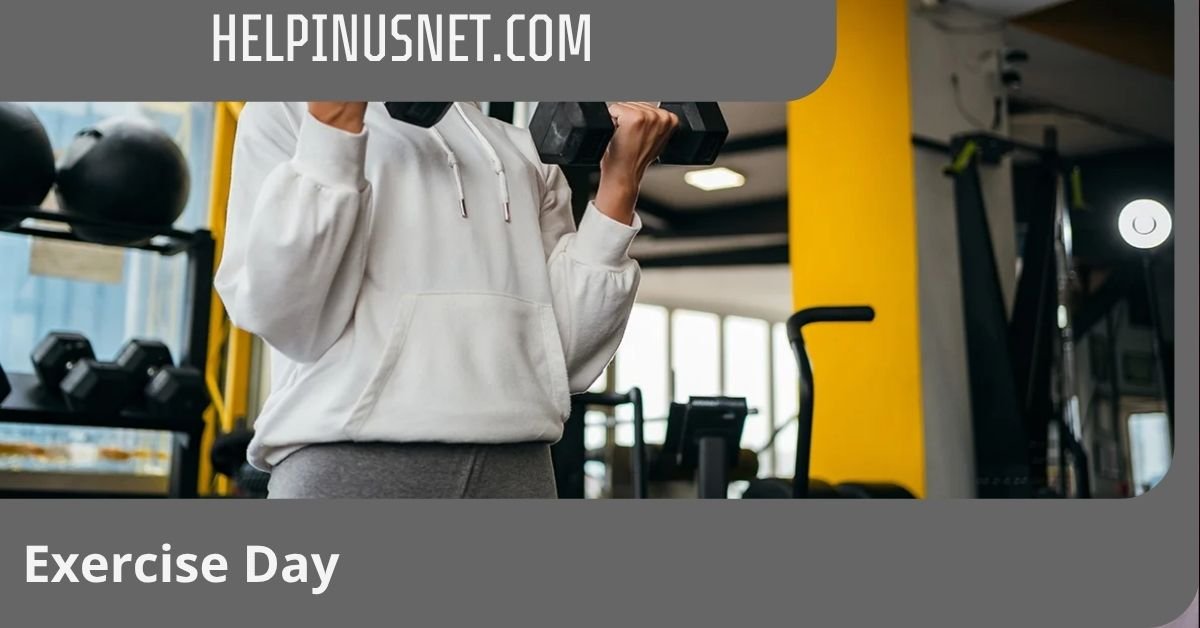
An exercise day is a planned day for physical activity. It can include strength training, cardio, stretching, mobility work, sports, walking, or a combination of different activities. An exercise day does not need to be difficult or long to be useful. The most important goal is to choose activities that match your fitness level, goals, schedule, and recovery needs.
For many people, an exercise day means going to the gym and following a specific workout. For others, it may be a home workout, a walk around the neighborhood, a bike ride, or an indoor routine when the weather is bad. There are many ways to stay active.
A well-planned exercise day can help improve strength, endurance, mobility, balance, energy, and general fitness. It can also make everyday activities such as walking, climbing stairs, carrying groceries, and playing with children easier.
The key is consistency. You do not need to complete the hardest workout possible. Instead, focus on creating a routine that you can follow regularly.
What Is an Exercise Day?
An exercise day is a day when you intentionally set aside time for physical activity.
The type of exercise can vary based on your goals. An exercise day may include:
- Strength training
- Walking
- Running
- Cycling
- Swimming
- Bodyweight exercises
- Stretching
- Yoga
- Mobility exercises
- Sports
- Dancing
- Indoor workouts
- Group fitness classes
Some people divide their exercise days by body part. For example, they may have a push day, pull day, and leg day. Others prefer full-body workouts several times a week.
There is no single exercise-day structure that is right for everyone.
Your ideal routine should consider your experience, available time, fitness goals, physical abilities, and recovery.
Why Is an Exercise Day Important?
Regular exercise can support many aspects of physical fitness and overall well-being.
A consistent exercise routine can help you:
- Build stronger muscles
- Improve cardiovascular fitness
- Develop better endurance
- Support healthy bones
- Improve balance
- Maintain mobility
- Support healthy weight management
- Improve physical performance
- Make daily activities easier
- Develop healthy habits
Exercise can also provide an opportunity to reduce time spent sitting. You do not have to exercise continuously throughout the day to be active. Short periods of movement can be useful, especially when combined with regular workouts.

An exercise day should therefore be viewed as part of a weekly lifestyle rather than as an isolated event.
How Often Should You Have an Exercise Day?
The ideal number of exercise days depends on the person.
A beginner may start with three workout days per week. Someone with more training experience may exercise four, five, or even more days each week.
A simple beginner schedule could be:
- Monday: Full-body strength
- Tuesday: Walking
- Wednesday: Rest
- Thursday: Full-body strength
- Friday: Walking or cardio
- Saturday: Full-body strength
- Sunday: Rest
Another person may prefer a push-pull-legs schedule.
The important point is that more exercise is not automatically better. Your body needs time to recover, especially after demanding workouts.
What Should an Exercise Day Include?
A well-organized exercise day usually has four basic parts:
- Warm-up
- Main workout
- Cool-down
- Recovery
The exact structure can change depending on the activity.
Warm-Up
A warm-up prepares your body for exercise.
A simple warm-up can include:
- Walking
- Marching in place
- Arm circles
- Gentle bodyweight squats
- Hip movements
- Easy cycling
- Light dynamic movements
Start at a comfortable intensity and gradually become more active.
Main Workout
The main workout is the primary part of your exercise day.
It might focus on:
- Strength
- Cardio
- Muscle endurance
- Mobility
- Balance
- Sports performance
- Full-body fitness
Cool-Down
After a demanding workout, gradually reduce your intensity.
For example, after jogging, you could walk slowly for several minutes before finishing.
Recovery
Recovery allows your body to adapt to training.
Good recovery habits include:
- Getting enough sleep
- Eating balanced meals
- Drinking enough fluids
- Taking rest days
- Avoiding unnecessary training overload
Beginner Exercise Day Routine
If you are new to exercise, you do not need an advanced workout.
A simple 30-minute exercise day could look like this.
Five-Minute Warm-Up
Start with:
- Easy walking
- Marching
- Arm circles
- Gentle leg movements
Twenty-Minute Workout
Try:
- Bodyweight squats
- Incline push-ups
- Glute bridges
- Resistance-band rows
- Step-ups
- Easy walking
Perform a comfortable number of repetitions and sets. Focus on controlled movement rather than speed.
Five-Minute Cool-Down
Finish with:
- Easy walking
- Gentle movement
- Comfortable stretching
This type of routine can be adjusted as your fitness improves.
What Are Push Day Exercises?
Push day exercises are exercises where you generally push resistance away from your body.
Common push day exercises include:
- Push-ups
- Bench press
- Dumbbell bench press
- Incline press
- Shoulder press
- Overhead press
- Chest press
- Triceps extensions
- Lateral raises
Push workouts commonly focus on the chest, shoulders, and triceps.
A basic push day might look like:
- Push-ups or bench press
- Shoulder press
- Incline dumbbell press
- Lateral raises
- Triceps extensions
The amount of weight and number of repetitions should match your training experience.
What Are Pull Day Exercises?
Pull day exercises involve pulling resistance toward your body.
Popular pull day exercises include:
- Pull-ups
- Assisted pull-ups
- Lat pulldowns
- Seated rows
- Dumbbell rows
- Cable rows
- Face pulls
- Biceps curls
Pull workouts commonly train the back, rear shoulders, and biceps.
A simple pull day could include:
- Lat pulldown
- Seated cable row
- Dumbbell row
- Face pull
- Biceps curl
Beginners can use lighter resistance while learning proper technique.
What Are Leg Day Exercises?
Leg day exercises focus on the lower body.
Common examples include:
- Squats
- Lunges
- Step-ups
- Deadlifts
- Romanian deadlifts
- Leg presses
- Hamstring curls
- Calf raises
- Glute bridges
A basic leg day could include:
- Squats
- Romanian deadlifts
- Step-ups
- Glute bridges
- Calf raises
Leg exercises can help develop lower-body strength and improve performance in everyday movements.
Push Day, Pull Day, and Leg Day Explained
Push, pull, and legs is a popular way to organize strength workouts.
Push Day
Focuses mainly on:
- Chest
- Shoulders
- Triceps
Pull Day
Focuses mainly on:
- Back
- Rear shoulders
- Biceps
Leg Day
Focuses mainly on:
- Quadriceps
- Hamstrings
- Glutes
- Calves
This type of training split can be useful for people who enjoy structured gym routines.
However, beginners do not have to use a push-pull-legs routine. A full-body routine can be simpler and more practical when someone exercises only a few times per week.
Best Indoor Exercises Rainy Day
Rainy weather can make outdoor exercise difficult. Fortunately, there are many ways to stay active indoors.
Some of the best indoor exercises rainy day options include:
- Walking indoors
- Marching in place
- Bodyweight squats
- Lunges
- Step-ups
- Wall push-ups
- Incline push-ups
- Glute bridges
- Resistance-band exercises
- Stationary cycling
- Dancing
- Yoga
- Mobility exercises
- Low-impact cardio
You do not need expensive equipment to have a useful indoor exercise day.
A 20-Minute Rainy-Day Indoor Workout
Try this simple workout at home.
Warm-Up: 5 Minutes
- March in place
- Arm circles
- Easy squats
- Gentle walking
Workout: 10 Minutes
Perform several rounds of:
- Squats
- Incline push-ups
- Glute bridges
- Resistance-band rows
- Marching in place
Cool-Down: 5 Minutes
- Slow walking
- Gentle mobility
- Comfortable stretching
You can increase or decrease the intensity according to your fitness level.
Can Walking Be an Exercise Day?
Yes.
Walking is one of the simplest ways to include physical activity in your routine.
You can make a walk more challenging by:
- Walking faster
- Walking uphill
- Adding stairs
- Increasing the distance
- Adding short periods of faster walking
Walking can also be useful on recovery days when you do not want to perform a demanding workout.
The most important factor is choosing a pace and duration that are appropriate for your ability.
What Is Exercise of the Day CrossFit?
The phrase exercise of the day CrossFit is often connected with the CrossFit concept of a daily workout, commonly called a WOD.
A CrossFit-style workout may combine several types of movements, such as:
- Squats
- Push-ups
- Pull-ups
- Running
- Rowing
- Jumping
- Kettlebell movements
- Weightlifting exercises
- Bodyweight exercises
These workouts can vary significantly in difficulty.
Beginners should not assume that they need to complete an advanced workout exactly as written. Many exercises can be modified.
For example, a beginner could perform an assisted pull-up instead of a traditional pull-up.
The goal should be appropriate training, not simply completing the most difficult version of an exercise.
Are High-Intensity Exercise Days Good for Everyone?
No.
High-intensity workouts can be useful for people who have developed an appropriate fitness base, but they are not necessary for everyone.
Beginners can make significant progress with:
- Walking
- Basic strength exercises
- Moderate cardio
- Mobility work
- Simple bodyweight movements
A workout should be challenging enough to provide a useful stimulus without becoming unnecessarily difficult.
How Long Should an Exercise Day Last?
There is no universal workout length.
An exercise day could last:
- 10 minutes
- 20 minutes
- 30 minutes
- 45 minutes
- 60 minutes
- Longer
The appropriate duration depends on your goals, exercise intensity, schedule, and fitness level.
A 20-minute workout that you perform consistently can be more useful for your lifestyle than a two-hour workout that you rarely complete.
How to Make Your Exercise Day More Effective
Several principles can make an exercise day more productive.
Focus on Consistency
Regular training is more important than having occasional perfect workouts.
Use Progressive Overload
As your body adapts, gradually increase the challenge.
You might increase:
- Weight
- Repetitions
- Sets
- Duration
- Exercise difficulty
- Resistance
Progress should be gradual rather than sudden.
Learn Proper Technique
Good technique helps you perform movements efficiently and safely.
Beginners should focus on learning basic movement patterns before adding significant resistance.
Allow Recovery
Rest is an important part of exercise.
Your body needs time to recover from demanding activity.
Choose Exercises You Enjoy
Enjoyable activities are easier to maintain.
You might prefer:
- Walking
- Swimming
- Cycling
- Dancing
- Strength training
- Sports
- Group classes
There is no requirement to choose one specific type of exercise.
Exercise Day for Weight Management
Exercise can be part of a healthy weight-management strategy.
However, exercise should not be viewed only as a way to burn calories.
Physical activity can support:
- Strength
- Cardiovascular fitness
- Mobility
- Physical function
- Energy
- Overall health
A balanced approach can include exercise, nutritious food, adequate sleep, and other healthy lifestyle habits.
Avoid the idea that you need to complete an extremely difficult workout to compensate for eating a particular food.
Exercise Day for Building Muscle
People who want to build muscle generally need regular resistance training.
Useful exercises include:
- Squats
- Presses
- Rows
- Pull-downs
- Lunges
- Deadlift variations
- Shoulder presses
- Bodyweight exercises
Progressive training is important. As your body adapts, you can gradually increase the challenge.
Recovery also matters. Muscles need time to adapt between demanding workouts.
Nutrition is another important part of muscle development. A balanced diet with adequate protein and overall nutrients can support training and recovery.
Exercise Day for Improving Endurance
Endurance training can include activities such as:
- Walking
- Jogging
- Running
- Cycling
- Swimming
- Rowing
- Dancing
Beginners can start with shorter sessions and gradually increase duration.
For example, a beginner could alternate periods of easy walking with slightly faster walking.
Over time, the duration or intensity can be increased according to individual ability.
Exercise Day for Older Adults
Exercise can remain important throughout adulthood.
Older adults can benefit from activities that support:
- Strength
- Endurance
- Balance
- Mobility
- Coordination
Examples include:
- Walking
- Resistance-band exercises
- Chair exercises
- Light strength training
- Swimming
- Balance exercises
- Gentle mobility work
Exercise should be adapted to the individual’s abilities and circumstances.
People with medical concerns or significant physical limitations should seek appropriate professional guidance before beginning a new demanding exercise program.
Exercise Day for Beginners Over 50
Starting exercise later in life can still provide meaningful benefits.
A beginner-friendly routine might include:
Strength
- Chair squats
- Wall push-ups
- Resistance-band rows
- Glute bridges
Cardio
- Walking
- Stationary cycling
- Swimming
Mobility
- Gentle hip movements
- Shoulder movements
- Ankle movements
Balance
- Supported single-leg standing
- Controlled heel-to-toe walking
Start with manageable activities and increase gradually.
Exercise Day at Home
Home workouts can be convenient because there is no need to travel to a gym.
A basic home exercise day can use:
- Bodyweight
- Resistance bands
- Dumbbells
- A sturdy chair
- A yoga mat
A simple full-body workout might include:
- Squats
- Push-ups
- Rows
- Lunges
- Glute bridges
- Planks
- Walking in place
You can make many exercises easier or harder depending on your ability.
Exercise Day at the Gym
A gym provides access to a wider range of equipment.
A beginner gym day could include:
- Leg press
- Chest press
- Lat pulldown
- Seated row
- Leg curl
- Shoulder press
- Light cardio
Machines can be useful for people who are learning resistance training because they can provide a structured movement path.
Free weights can also be valuable when used appropriately.
Exercise Day and Recovery
Recovery is one of the most overlooked parts of fitness.
Your body needs time to adapt to exercise.
Recovery can involve:
- Rest days
- Sleep
- Hydration
- Balanced nutrition
- Lower-intensity activity
- Appropriate workout spacing
You do not need to train every muscle intensely every day.
If you complete a demanding leg workout, for example, you may choose an easier walking or upper-body day afterward.
How to Know If Your Exercise Day Is Too Difficult
A workout should be challenging, but excessive difficulty can make training difficult to maintain.
Pay attention to signs such as:
- Persistent exhaustion
- Performance getting worse
- Unusual ongoing soreness
- Difficulty recovering
- Repeated injuries
- Lack of motivation
- Poor sleep following frequent hard workouts
Normal exercise effort is different from sharp, severe, or unusual pain.
If you experience concerning symptoms during exercise, stop the activity and seek appropriate medical attention.
Common Exercise Day Mistakes
Doing Too Much Too Soon
Beginners sometimes increase training volume or intensity too quickly.
Start with manageable exercise and build gradually.
Ignoring Rest
More workouts do not automatically produce better results.
Recovery matters.
Copying Someone Else’s Workout
A routine designed for an experienced athlete may not be appropriate for a beginner.
Only Training Favorite Muscles
A balanced routine should consider the entire body.
Changing Exercises Constantly
Repeating basic exercises allows you to learn technique and measure improvement.
Making Workouts Too Complicated
You do not need 20 different exercises to have an effective workout.
A Simple Seven-Day Exercise Day Schedule
Here is one example of a balanced weekly routine.
Monday: Full-Body Strength
Try:
- Squats
- Push-ups
- Rows
- Glute bridges
- Core exercises
Tuesday: Cardio
Choose:
- Brisk walking
- Cycling
- Swimming
- Easy jogging
Wednesday: Recovery
Try:
- Easy walking
- Mobility
- Gentle stretching
Thursday: Strength
Try:
- Step-ups
- Presses
- Rows
- Hip-hinge exercises
- Core exercises
Friday: Cardio
Choose an enjoyable aerobic activity.
Saturday: Recreational Activity
Try:
- Hiking
- Sports
- Dancing
- Cycling
- Swimming
- Long walks
Sunday: Rest
Rest or perform gentle movement if desired.
This schedule is only an example. Your actual routine should reflect your experience, goals, schedule, and physical abilities.
How to Create Your Own Exercise Day
Creating an exercise day becomes easier when you follow a simple process.
Step 1: Choose Your Goal
Ask yourself what you want to improve.
Your goal may be:
- General health
- Strength
- Muscle development
- Endurance
- Mobility
- Weight management
- Sports performance
Step 2: Select an Activity
Choose an activity that supports your goal.
Step 3: Decide How Long You Can Realistically Exercise
Do not create a schedule that does not fit your life.
Step 4: Select Appropriate Exercises
Choose movements that match your experience and available equipment.
Step 5: Add Recovery
Schedule easier days or rest when necessary.
Step 6: Track Your Progress
You can record:
- Exercises
- Repetitions
- Sets
- Weight
- Workout duration
- Walking distance
- How difficult the session felt
Tracking can help you identify gradual improvements.
Exercise Day and Motivation
You will not feel motivated every day.
That is normal.
Instead of relying entirely on motivation, create simple habits.
For example:
- Exercise at the same time each day
- Keep workout clothes ready
- Plan your workouts in advance
- Start with a short session
- Exercise with a friend
- Choose enjoyable activities
- Keep a workout journal
If you do not feel like completing a full workout, you can begin with 10 minutes. Once you start moving, you may decide to continue.
What Should You Do If You Miss an Exercise Day?
Missing one exercise day does not destroy your progress.
Do not try to punish yourself by performing an extremely difficult workout the next day.
Simply return to your normal routine.
Fitness develops over time. One missed workout is much less important than your overall pattern of activity.
Is Home Exercise Better Than Gym Exercise?
Neither option is automatically better.
Home Exercise Benefits
Home workouts can offer:
- Convenience
- Privacy
- Lower travel time
- Flexible scheduling
- Low equipment requirements
Gym Exercise Benefits
A gym can provide:
- More equipment
- Machines
- Free weights
- Heavier resistance options
- Group classes
- A dedicated exercise environment
Outdoor Exercise Benefits
Outdoor activity can provide:
- Walking opportunities
- Hiking
- Cycling
- Sports
- Recreational movement
The best environment is the one that helps you exercise consistently.
How to Stay Safe on an Exercise Day
Safety should be part of every workout.
Useful habits include:
- Start at an appropriate intensity
- Learn proper exercise technique
- Use equipment correctly
- Wear suitable footwear
- Stay hydrated
- Allow recovery
- Increase training gradually
- Pay attention to unusual symptoms
If you are new to exercise or have health concerns, getting professional guidance can help you choose appropriate activities.
Exercise Day for a Busy Schedule
You do not need an entire afternoon to exercise.
A busy person could divide activity into shorter periods.
For example:
Morning:
- 10-minute walk
Lunch:
- 10-minute walk
Evening:
- 20-minute strength workout
This creates a practical exercise routine without requiring one long session.
Short workouts can also be useful on days when your schedule changes unexpectedly.
Exercise Day During Bad Weather
Bad weather does not have to cancel your routine.
When outdoor exercise is unsafe or inconvenient, move indoors.
Options include:
- Walking inside
- Marching
- Bodyweight exercises
- Resistance bands
- Yoga
- Dancing
- Stationary cycling
- Indoor stairs
- Mobility work
Having a backup indoor plan can make it easier to maintain consistency.
Exercise Day for Mental Well-Being
Physical activity can also be part of a healthy approach to mental well-being.
Some people find that exercise provides:
- A break from work
- Time outdoors
- Social interaction
- A sense of accomplishment
- A regular daily structure
Exercise should not be treated as a replacement for professional care when someone is experiencing serious mental-health concerns. Instead, it can be one component of a broader healthy lifestyle.
Frequently Asked Questions About Exercise Day
1. Should I exercise before or after work?
Either option can work. The best time is often the time you can follow consistently. Some people have more energy in the morning, while others prefer exercising after work. Choose a time that fits your schedule and allows you to train safely.
2. Should I drink water during an exercise day?
Hydration needs vary depending on exercise duration, intensity, temperature, and individual factors. For ordinary workouts, drinking fluids regularly and responding to thirst is a practical approach. Longer or more demanding exercise sessions may require more attention to fluid replacement.
3. Can I exercise every day?
You can be physically active every day, but that does not mean every day should involve a hard workout. A weekly routine can combine demanding training with walking, mobility, recreational activity, and rest or recovery days.
4. Should I stretch before every workout?
Not every workout requires a long stretching session. A gradual warm-up and dynamic movements can prepare you for activity. Longer static stretching may be more suitable after exercise or during a separate mobility session, depending on your goals.
5. What is the best exercise day for someone with no equipment?
A bodyweight full-body workout can be a practical option. Exercises such as squats, wall or incline push-ups, lunges, glute bridges, planks, and marching can provide a useful starting point. The exercises can be adjusted as your fitness improves.
Conclusion
An exercise day is simply a planned opportunity to move, train, and improve your physical fitness. It does not have to involve an expensive gym membership, advanced equipment, or an extremely difficult workout.
Beginners can start with simple full-body workouts, walking, mobility exercises, and basic strength movements. More experienced exercisers may prefer structured routines such as push day exercises, pull day exercises, and leg day exercises.
When outdoor exercise is not practical, the best indoor exercises rainy day routines can help you stay active at home. People interested in CrossFit may also use an exercise of the day CrossFit-style format, but workouts should be adjusted to match individual experience and ability.
The most effective exercise day is one that you can perform safely and repeat consistently. Focus on gradual improvement rather than perfection. Give your body time to recover, choose activities you enjoy, and build a weekly routine that fits your real life.
Whether you exercise for strength, endurance, mobility, weight management, recreation, or general health, regular movement can become a valuable part of your lifestyle.
