
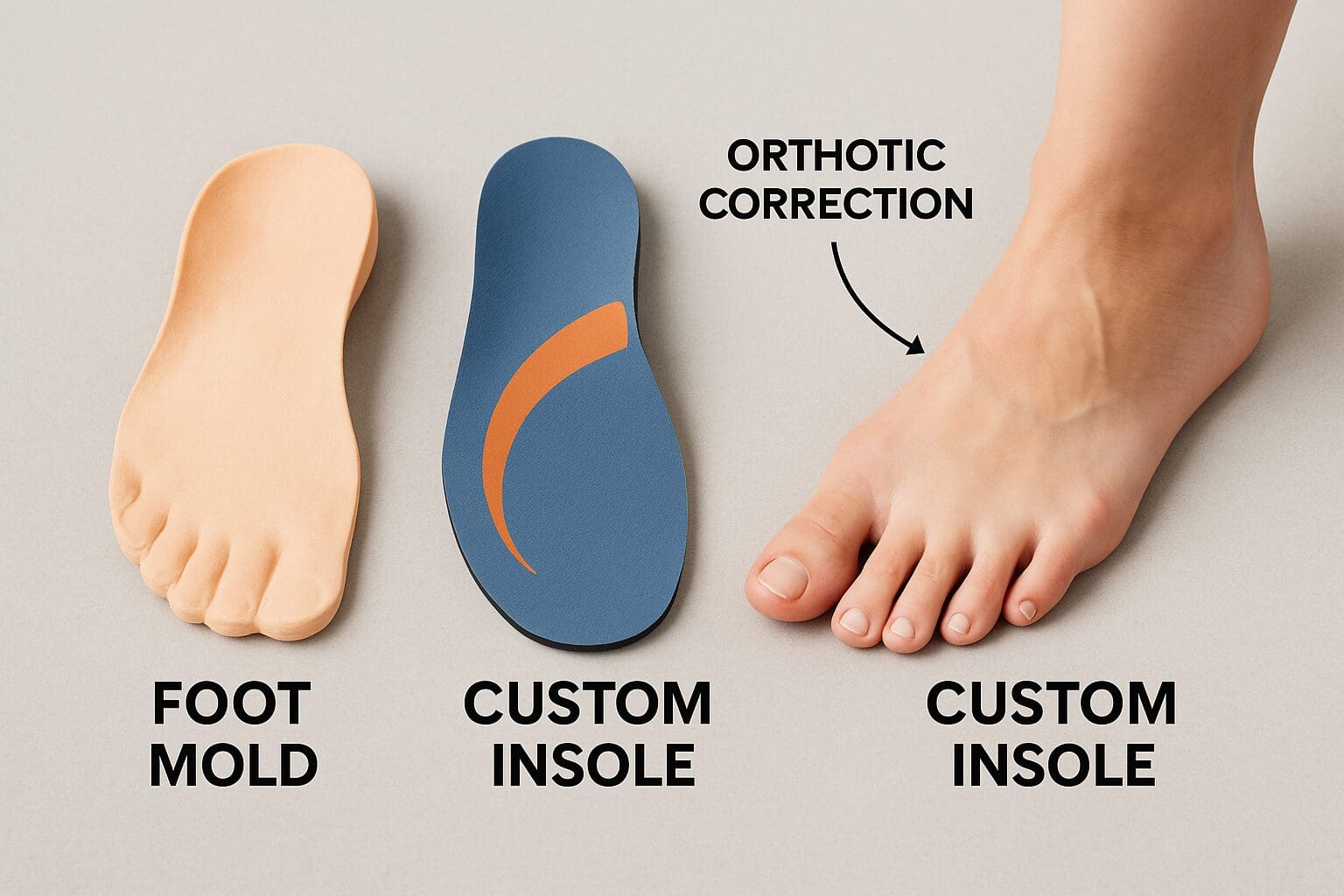
When foot alignment or function is compromised, discomfort and mobility issues can arise. Podiatrists may recommend custom orthotics, which are specially made devices designed to support the feet. These inserts are prescribed to match the contours of your feet, addressing individual structure and pathology. A podiatrist creates a prescription for custom orthotics after a thorough examination of your feet, ankles, and lower legs. This assessment allows for a device that accommodates your unique foot structure.
What Are Orthotics?
Orthotics are medical appliances worn inside shoes to correct biomechanical foot issues related to walking, standing, or running. These devices can help manage foot pain, provide support, and prevent the worsening of certain foot deformities. A podiatrist prescribes custom orthotics to function with your feet in a specific manner. The creation process starts with a detailed evaluation. Following the evaluation, the specialist captures a three-dimensional image of each foot. This is typically done through methods like plaster casting, 3D scanning, or a foam impression box.
This resulting mold or scan is sent to a laboratory where technicians use the model and the podiatrist’s prescription to fabricate the device. The materials used depend on the treatment goals. The final product is a durable insert tailored to your specific requirements, designed to improve foot function.
What Do They Treat?
Podiatrists use custom orthotics to address a wide range of conditions affecting the foot and lower limb. The primary purpose is to correct misalignments and support the foot’s structure, which can alleviate symptoms. Orthotics can redistribute pressure on the bottom of the feet, relieving pain from areas under strain.
Common conditions managed with orthotics include plantar fasciitis, a frequent cause of heel pain, where the devices support the arch and reduce stress on the plantar fascia. People with flat feet or high arches may also benefit from the support and improved foot alignment they provide. Other conditions include bunions, neuromas, and tendonitis. These devices can help improve overall body mechanics and reduce discomfort in other areas.
What Are the Types?
Custom orthotics fall into two main categories: functional and accommodative. The type prescribed depends on the condition being treated. Both are created from a custom mold of the feet, but their materials and purposes differ.
Functional orthotics are designed to control abnormal motion and correct foot function. They are often crafted from semi-rigid materials, such as plastic or graphite. These firm materials help guide the foot into a more efficient position during movement. Functional orthotics are typically used for issues like tendonitis.
Accommodative orthotics are generally softer, providing cushioning and support. Their main purpose is to relieve pressure from sore spots. These are often used for conditions such as diabetic foot ulcers or painful calluses. The materials are more pliable, which can allow them to absorb shock and protect sensitive areas.
Confer With a Podiatrist
Proper foot health involves professional guidance. A podiatrist is a doctor who specializes in the diagnosis and treatment of conditions of the foot, ankle, and leg. This specialist can perform a biomechanical assessment to determine if custom orthotics are a suitable option for you. They can differentiate between issues that may be helped by over-the-counter insoles and those requiring a custom-made device. During a consultation, the podiatrist will review your medical history and perform a physical examination, and based on this evaluation, the podiatrist can write a precise prescription for an orthotic.
