
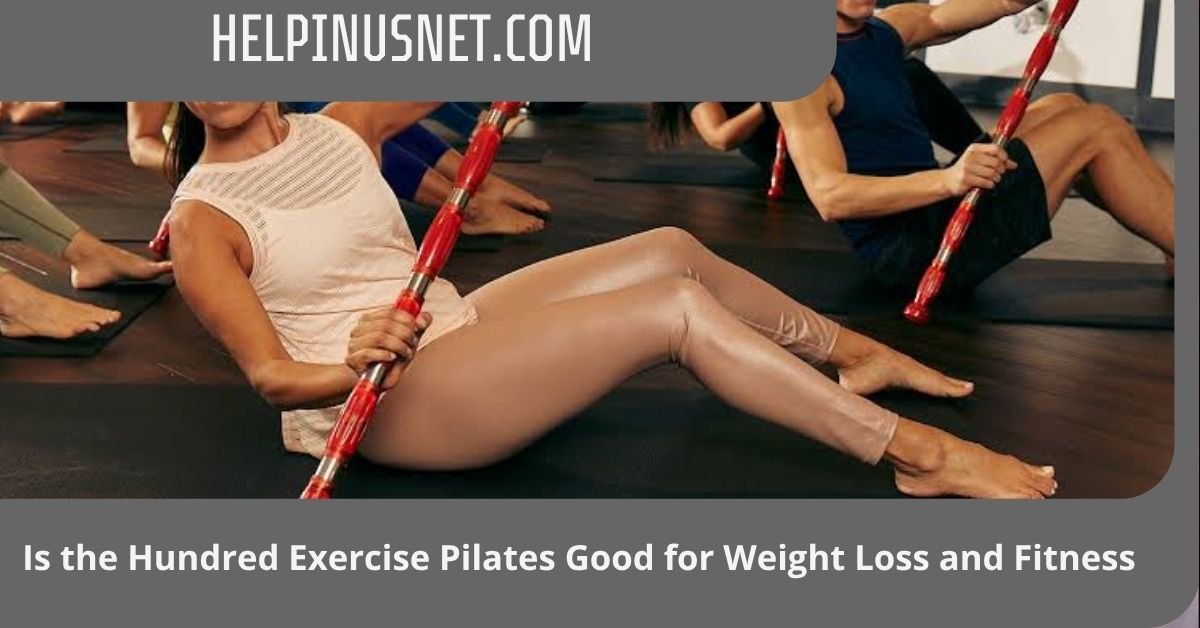
The Hundred is one of the best-known exercises in classical Pilates. It is a rhythmic mat exercise that combines controlled arm movements, abdominal engagement, breathing, and steady body positioning. Despite its simple appearance, the Hundred can be challenging because it asks several parts of the body to work together at the same time.
For people searching for “hundred exercise Pilates,” the most common questions are simple: What is the Pilates Hundred? How do you do it correctly? What muscles does it work? Is it good for beginners? And how can you modify it if the full version feels too difficult?
This guide answers those questions in clear, practical language.
The information below is educational and is not a substitute for an evaluation by a doctor, physical therapist, or qualified Pilates instructor. If an exercise causes sharp pain, dizziness, unusual shortness of breath, or another concerning symptom, stop and seek appropriate medical advice.
What Is the Hundred Exercise in Pilates?
The Pilates Hundred is a traditional mat Pilates exercise that uses repeated arm pumps while the person maintains a controlled abdominal position and follows a specific breathing rhythm.
The classic version is usually performed lying on the back. The legs may be lifted and extended, while the upper body is slightly curled forward. The arms reach forward and move up and down in small, controlled pulses.
The exercise gets its name from the traditional goal of performing 100 arm pumps.
A common breathing pattern is:
- Inhale for five counts.
- Exhale for five counts.
- Repeat the pattern until 100 arm pumps are completed.
The Hundred is not simply an abdominal exercise. Pilates is generally described in research as a mind-body form of exercise involving strength, core stability, flexibility, posture, breathing, and muscle control.
That combination is important because the goal is not to move as quickly as possible. The goal is to maintain control while breathing and coordinating several movements.
Why Is the Pilates Hundred Called “The Hundred”?
The name comes from the traditional 100-pump format.
If you perform 10 sets of 10 arm pumps, you reach 100 pumps. The five-count inhale and five-count exhale breathing pattern is commonly used to organize those repetitions.
However, beginners do not need to force themselves to complete 100 pumps immediately.
The number 100 is part of the traditional exercise structure, but good technique is more important than reaching the number at any cost.
For example, someone who can perform 30 controlled pumps with good posture may get more value from that practice than someone who performs 100 rushed pumps while holding the breath or straining the neck.
What Muscles Does the Pilates Hundred Work?
The Hundred primarily challenges the muscles that help stabilize the trunk and pelvis.
Depending on the version and the person’s technique, it can involve:
- Rectus abdominis
- Transverse abdominis
- Internal and external obliques
- Hip flexors
- Gluteal muscles
- Inner thigh muscles
- Muscles around the shoulders
- Latissimus dorsi
- Pelvic floor muscles
- Deep stabilizing muscles of the trunk
The abdominal muscles are often the most noticeable because the exercise requires the torso to remain controlled while the arms move.
However, the Hundred should be viewed as a whole-body coordination exercise rather than an isolated abdominal movement.
What Is the Main Purpose of the Pilates Hundred?
The Hundred is commonly used to practice several Pilates skills at once.
These include:
- Core control
- Breathing coordination
- Abdominal endurance
- Postural awareness
- Arm endurance
- Concentration
- Movement control
- Coordination between breathing and movement
One useful way to think about the Hundred is as a “connection” exercise.
Your arms are moving.
Your breathing is changing.
Your abdominal muscles are working.
Your legs may be held in a demanding position.
Your spine must remain controlled.
All of these actions have to work together.
That is why the exercise can feel much harder than the small arm movements suggest.
How to Do the Pilates Hundred Step by Step
If you are learning the Hundred exercise Pilates technique, start with the easiest version that allows you to maintain control.
Step 1: Lie on Your Back
Lie comfortably on a Pilates mat or another firm exercise surface.
Bend your knees and place your feet on the floor.
Let your arms rest beside your body.
Relax your shoulders.
Take a few normal breaths before starting.
Step 2: Find a Comfortable Spine Position
Your spine should be controlled without forcing it into an extreme position.
Avoid aggressively pressing your lower back into the floor.
At the same time, do not allow your ribs and pelvis to lose control.
Think about keeping your trunk stable while breathing naturally.
Step 3: Prepare the Legs
The classical Hundred can involve lifting and extending the legs.
However, this is one of the most challenging parts of the movement.
If straight legs make your lower back arch or your abdominal control disappear, keep your knees bent.
You can gradually increase the difficulty as your control improves.
Step 4: Lift the Head and Shoulders if Appropriate
In the traditional form, the upper body is lifted slightly from the mat.
The chest comes forward while the neck remains long.
Do not pull your head forward with your hands.
Your abdominal muscles should help support the position.
If this position causes neck discomfort, use a modified version with your head resting on the mat.
Step 5: Reach the Arms Forward
Extend your arms toward the front of the room.
Keep the arms relatively low and parallel to the floor.
Avoid locking the elbows.
Keep the shoulders away from the ears.
Step 6: Begin the Arm Pumps
Start small, controlled movements with your arms.
The movement should come from the shoulders and upper arms rather than large swings.
The arms move up and down repeatedly.
There is no need to create a huge range of motion.
Step 7: Coordinate Your Breathing
A traditional pattern is five counts of inhalation followed by five counts of exhalation.
For example:
- Inhale: 1, 2, 3, 4, 5
- Exhale: 1, 2, 3, 4, 5
Continue the arm pumps throughout the breathing cycle.
The breathing pattern helps create rhythm and makes the Hundred more than a simple arm exercise.
Step 8: Work Toward 100 Pumps
The traditional target is 100 arm pumps.
You can divide them into smaller groups.
For example:
- 20 pumps
- Rest
- 20 pumps
- Rest
- 20 pumps
- Rest
- 20 pumps
- Rest
- 20 pumps
This is especially useful for beginners.
Step 9: Finish With Control
Slowly stop the arm movement.
Lower your head and shoulders if they are lifted.
Bring your knees toward your chest or return your feet to the floor.
Take several comfortable breaths.
Do not rush immediately into another exercise.
How Should You Breathe During the Pilates Hundred?
Breathing is one of the defining parts of the Hundred.
The traditional approach uses five-count inhalations and five-count exhalations.
This gives the exercise a steady rhythm.
However, beginners should not treat the breathing pattern as a competition.
If counting five breaths at a time makes you tense or causes you to hold your breath, use a natural breathing pattern first.
A simple progression is:
- Learn the body position.
- Learn the arm movement.
- Practice comfortable breathing.
- Add the traditional five-in, five-out rhythm.
- Gradually increase the number of pumps.
This approach often makes the exercise easier to understand.
Why Is Breathing Important in Pilates?
Pilates places significant attention on controlled breathing.
Breathing can help you maintain rhythm, focus, and awareness during movement.
It also gives you something to coordinate with the physical action.
The Hundred is a clear example because the arms continue moving while the breathing follows a repeated pattern.
The goal is not to breathe as forcefully as possible.
The goal is controlled, comfortable breathing that supports the movement.
What Are the Benefits of the Pilates Hundred?
The Hundred can offer several fitness-related benefits when performed appropriately.
However, it is important to avoid exaggerated claims.
Research on Pilates as a whole suggests potential benefits for areas such as flexibility, muscular endurance, balance, and some measures of physical function, but the quality of evidence varies between outcomes and populations.
1. Builds Core Endurance
The Hundred requires the trunk to stay controlled for an extended period.
This can challenge abdominal endurance.
Core endurance is different from simply having strong abdominal muscles.
It involves maintaining a useful position while the body continues working.
2. Improves Movement Coordination
The exercise asks you to coordinate:
- Arm movement
- Breathing
- Abdominal control
- Leg position
- Spinal position
- Concentration
This makes coordination a major part of the exercise.
3. Challenges Shoulder and Arm Endurance
The arms repeatedly move for a relatively long period.
Although the movement is small, repetition can create fatigue.
This makes the Hundred useful for practicing upper-body endurance within a Pilates session.
4. Encourages Body Awareness
Pilates often emphasizes controlled movement and awareness of body position.
During the Hundred, you have to notice what is happening with your neck, shoulders, ribs, pelvis, legs, and breathing.
That awareness can help improve movement quality.
5. Can Support Balance and Functional Fitness
Pilates research has found benefits for balance in some populations, particularly older adults. A 2024 systematic review and meta-analysis found that Pilates improved measures of static and dynamic postural balance compared with control groups, although the certainty of evidence varied and Pilates was not consistently better than other forms of exercise.
The Hundred alone should not be credited for those results because research usually examines Pilates programs rather than one isolated exercise.
6. Requires No Special Equipment
One major advantage is convenience.
You generally need only:
- A mat
- Comfortable clothing
- Enough floor space
That makes the exercise suitable for home Pilates practice when the movement is appropriate for you.
Does the Pilates Hundred Burn Belly Fat?
The Hundred can use abdominal muscles and increase physical effort, but it should not be described as a special exercise that directly burns belly fat.
You cannot choose exactly where your body loses fat by exercising one body part.
Body-fat changes depend on many factors, including overall physical activity, food intake, genetics, sleep, age, and other aspects of health.
The Hundred can be part of a well-rounded exercise routine, but it should not be presented as a magic solution for abdominal fat.
Can the Pilates Hundred Give You Abs?
The Hundred can strengthen and challenge abdominal muscles.
However, visible abdominal definition depends on more than abdominal exercise.
Factors include:
- Overall body composition
- Genetics
- Muscle development
- Nutrition
- Total physical activity
- Individual fat distribution
Doing hundreds of repetitions does not guarantee visible abdominal muscles.
A better goal is improved core control, endurance, and movement quality.
Pilates Hundred for Beginners
The Hundred is often introduced early in Pilates programs, but the full classical version can be difficult for a beginner.
The biggest challenge is maintaining control while the legs and upper body are positioned away from the floor.
A beginner-friendly version may look very different from an advanced version.
That is completely normal.
Beginner Modification 1: Keep Your Feet on the Floor
Lie on your back with your knees bent.
Keep both feet on the floor.
Lift your arms and perform the small arm pumps.
This removes much of the leg challenge.
Beginner Modification 2: Keep Your Head Down
If your neck becomes tired, keep your head and shoulders on the mat.
Focus on breathing, abdominal control, and arm movement.
Beginner Modification 3: Bend the Knees
Instead of straightening your legs, keep your knees bent.
The closer the legs are to the floor, the more challenging the abdominal position can become.
Adjust the leg position based on your ability to maintain control.
Beginner Modification 4: Reduce the Repetitions
You do not need to start with 100 pumps.
Try:
- 10 pumps
- 20 pumps
- 30 pumps
- 40 pumps
Build gradually.
Pilates Hundred Progression for Beginners
A simple progression might look like this:
Level 1
- Head resting on mat
- Knees bent
- Feet on floor
- Small arm pumps
- Comfortable breathing
Level 2
- Head resting on mat
- Knees bent
- Legs lifted
- Small arm pumps
- Controlled breathing
Level 3
- Head and shoulders slightly lifted
- Knees bent
- Legs lifted
- Small arm pumps
Level 4
- Upper body lifted
- Legs extended higher
- Controlled arm pumps
- Traditional breathing pattern
Level 5
- Classical Hundred position
- Extended legs
- Strong trunk control
- 100 controlled pumps
Progress should be based on technique rather than simply doing a harder version.
Common Pilates Hundred Mistakes
The Hundred looks simple, but several common errors can reduce its effectiveness.
Mistake 1: Pulling the Neck Forward
If your neck is doing most of the work, the position may be too difficult.
Think about lengthening the back of the neck.
If needed, lower your head to the mat.
Mistake 2: Arching the Lower Back
When the legs are lifted or extended, some people lose abdominal control and allow the lower back to arch excessively.
If this happens, modify the exercise.
Bend your knees or bring your legs higher.
Mistake 3: Making the Arm Movement Too Large
The Hundred uses relatively small arm pumps.
Large swings can make the exercise harder to control.
Keep the movement steady and deliberate.
Mistake 4: Shrugging the Shoulders
Try to keep your shoulders away from your ears.
Tension in the neck and shoulders is often a sign that the position needs adjustment.
Mistake 5: Holding Your Breath
Holding your breath defeats one of the main purposes of the exercise.
If the traditional breathing rhythm feels too difficult, slow down and use comfortable breathing.
Mistake 6: Chasing the Number 100
Completing 100 poor-quality repetitions is not the goal.
Good technique matters more than reaching the number.
Mistake 7: Going Too Fast
Speed can make the exercise feel easier temporarily, but it can also reduce control.
Use a steady rhythm.
How Long Should You Do the Pilates Hundred?
There is no universal requirement for how long one person should perform the Hundred.
The traditional format aims for 100 arm pumps.
For a beginner, a shorter set may be more appropriate.
You could begin with 20 to 30 pumps and gradually increase the number as your technique improves.
The right amount depends on:
- Fitness level
- Experience
- Current symptoms
- Exercise goals
- Technique
- Overall workout plan
More is not always better.
How Often Should You Do the Pilates Hundred?
The Hundred can be included in a regular Pilates routine, but there is no need to perform it every day simply because it has 100 repetitions.
A balanced fitness program should include different movement patterns.
You might combine Pilates with:
- Walking
- Strength training
- Mobility work
- Cardiovascular exercise
- Balance exercises
- Recreational activities
Pilates can complement other forms of exercise rather than replacing every type of physical activity.
Research comparing Pilates with other exercise methods has not consistently shown Pilates to be superior for strength, balance, or flexibility. The evidence in this area is often low or very low certainty.
Is the Pilates Hundred Good for Core Strength?
The Hundred can be useful for core endurance and control.
However, “core strength” is a broad term.
Your core includes more than your abdominal muscles. It includes muscles that help control the trunk and pelvis.
A 2023 systematic review examining Pilates for core muscle activation in people with chronic low back pain found emerging evidence that Pilates can improve core muscle strength and may be effective, while also noting that Pilates was not clearly superior to equally dosed exercise.
This is a good example of why Pilates should be viewed as one useful exercise approach rather than a unique solution for every fitness goal.
Pilates Hundred and Lower Back Comfort
Some people may feel that the Hundred challenges their lower back.
That does not necessarily mean the exercise is bad.
It may mean the chosen version is currently too difficult.
Try reducing the challenge by:
- Keeping your feet on the floor
- Bending your knees
- Raising your legs higher
- Keeping your head down
- Reducing the number of repetitions
- Working with a qualified instructor
If you have persistent or significant back pain, especially pain associated with weakness, numbness, injury, or other concerning symptoms, talk with a healthcare professional before using challenging abdominal exercises.
Pilates Hundred and Neck Strain
Neck discomfort is one of the most common complaints people may experience during the more demanding version.
The solution is not to force your neck to become stronger by pushing through pain.
Instead, modify the exercise.
You can keep your head on the floor and focus on the breathing and arm movement first.
If you consistently experience neck pain during Pilates, a qualified instructor or physical therapist can help identify whether your position or exercise selection needs to change.
Who Should Be Careful With the Hundred?
Many healthy adults can perform a modified Hundred safely when appropriate technique is used.
However, extra caution may be appropriate for people with:
- Recent injuries
- Significant neck problems
- Shoulder problems
- Hip problems
- Back problems
- Abdominal surgery history
- Balance concerns
- Certain medical conditions
- Pregnancy or recent childbirth
The appropriate modification depends on the person.
A general exercise article cannot determine whether the full Hundred is appropriate for a specific medical condition.
If you are unsure, ask a qualified healthcare professional.
Is the Pilates Hundred Safe During Pregnancy?
Pregnancy changes the way the body handles many exercises.
The traditional Hundred may not be appropriate for everyone during pregnancy, particularly because it can involve lying on the back, lifting the upper body, and maintaining a demanding abdominal position.
Do not assume that an exercise is automatically safe simply because it is labeled Pilates.
If you are pregnant, ask your obstetric or healthcare provider about appropriate exercise and work with an instructor who has relevant prenatal training.
Pilates Hundred After Pregnancy
Returning to exercise after pregnancy should be gradual.
The full Hundred may not be the best first exercise for everyone.
Factors such as abdominal recovery, pelvic floor function, strength, symptoms, delivery history, and general fitness can affect exercise choices.
If you experience pain, pressure, leaking, unusual abdominal bulging, or other concerning symptoms, seek professional assessment rather than pushing through the movement.
Pilates Hundred for Older Adults
The Hundred can be modified for older adults, but the classical version may not be necessary.
A person can practice a simpler variation with:
- Head down
- Knees bent
- Feet supported
- Small arm movements
- Comfortable breathing
Pilates as a broader exercise method has evidence supporting improvements in balance among older adults, although researchers also emphasize limitations in study quality and certainty.
For older beginners, comfort, stability, and confidence should come before achieving the traditional 100-pump format.
Pilates Hundred vs. Crunches
The Hundred and a traditional abdominal crunch are different exercises.
A crunch mainly involves repeated flexion of the trunk.
The Hundred combines:
- Trunk stabilization
- Arm movement
- Breathing
- Abdominal endurance
- Leg positioning
- Coordination
Neither exercise is automatically “better” for every person.
Your choice should depend on your goals, experience, physical limitations, and overall training plan.
Pilates Hundred vs. Plank
A plank is another popular core exercise, but the movement demands are different.
A plank emphasizes maintaining a relatively fixed body position while resisting movement.
The Hundred adds repeated arm movement and a specific breathing pattern.
A useful program may include different core exercises rather than relying on only one movement.
Pilates Hundred vs. Leg Raises
Leg raises primarily challenge the muscles involved in controlling the legs and pelvis.
The Hundred involves more simultaneous coordination between the upper body, trunk, legs, and breathing.
Again, the best choice depends on the goal.
For general fitness, variety is often more useful than trying to find one “perfect” abdominal exercise.
How to Make the Hundred Easier
If the Hundred is too hard, do not immediately stop Pilates.
Instead, reduce one or more demands.
Try:
- Keep your head down.
- Bend your knees.
- Keep your feet on the floor.
- Raise your legs higher.
- Perform fewer pumps.
- Slow down.
- Focus on breathing.
- Take breaks between sets.
These changes allow you to practice the fundamental movement without forcing the hardest version.
How to Make the Hundred More Challenging
Once you can perform the movement with strong control, you can gradually increase difficulty.
Possible progressions include:
- Longer sets
- More extended legs
- Lower leg position
- Longer upper-body hold
- More continuous repetitions
- More advanced Pilates sequences
Do not lower the legs so far that you lose control of the spine.
Difficulty should increase without sacrificing technique.
How to Know if Your Form Is Good
Good Hundred technique usually feels controlled rather than chaotic.
Ask yourself:
- Can I breathe normally?
- Are my shoulders relaxed?
- Is my neck comfortable?
- Can I control my ribs and pelvis?
- Are my arm pumps small and steady?
- Can I maintain the position without straining?
- Am I moving without pain?
If several answers are “no,” make the exercise easier.
This is one of the most useful principles for Pilates beginners: the best version is the version you can control.
A Simple 5-Minute Pilates Hundred Practice
For beginners, you can build a short practice around the movement.
Minute 1: Breathing
Lie comfortably on your back.
Take slow, comfortable breaths.
Notice the movement of your ribs and abdomen.
Minute 2: Preparation
Bend your knees and place your feet on the floor.
Practice gently engaging your abdominal muscles.
Minute 3: Arm Pumps
Lift your arms and begin small pumps.
Keep your head down if needed.
Continue for 20 to 30 pumps.
Minute 4: Rest and Repeat
Rest briefly.
Repeat another 20 to 30 pumps.
Focus on smooth breathing.
Minute 5: Cool Down
Stop the pumps.
Lower your arms.
Take several comfortable breaths.
This short practice can help you learn the movement before progressing toward the traditional format.
How to Add the Hundred to a Pilates Workout
The Hundred is often used near the beginning of a Pilates session because it can introduce breathing, concentration, and core engagement.
A simple home Pilates session might include:
- Breathing practice
- The Hundred
- Pelvic curls or bridges
- Single-leg movements
- Side-lying exercises
- Gentle spinal mobility
- Stretching or relaxation
The exact order can vary.
If the Hundred makes you tired too early, you can also use a modified version later in the workout.
How Many Calories Does the Pilates Hundred Burn?
There is no single calorie number for the Hundred.
Calorie expenditure depends on factors such as:
- Body size
- Age
- Fitness level
- Exercise intensity
- Duration
- Technique
- Rest periods
Online calorie calculators may give estimates, but they should not be treated as exact measurements.
The Hundred is better understood as a core-control and muscular-endurance exercise than as a calorie-burning test.
Can You Do the Hundred Every Day?
Some people may tolerate a gentle version frequently, but daily practice is not required for progress.
Muscles need appropriate recovery, especially when exercise is challenging.
If you want to practice every day, consider alternating intensity.
For example:
- Day 1: Full or moderate practice
- Day 2: Easy breathing and mobility
- Day 3: Moderate practice
- Day 4: Rest or walking
Your overall training volume matters more than following a rigid rule.
Does the Hundred Improve Posture?
Pilates is commonly associated with posture and body awareness.
The Hundred requires attention to the position of the head, shoulders, ribs, pelvis, and legs.
That can help you become more aware of how you organize your body during movement.
However, one exercise should not be marketed as a guaranteed posture correction.
Posture is influenced by strength, mobility, habits, work environment, pain, vision, balance, and individual anatomy.
A broader exercise program is usually more useful than relying on the Hundred alone.
The History Behind the Pilates Hundred
The Hundred comes from the traditional Pilates system developed by Joseph Pilates.
The Pilates method became known for its emphasis on controlled movement, breathing, concentration, precision, and whole-body coordination.
Modern Pilates includes many different teaching styles.
Some instructors follow classical sequences closely, while others use contemporary approaches that adapt exercises to current exercise science, rehabilitation needs, and individual ability.
This is why you may see different versions of the Hundred online.
A variation is not necessarily wrong simply because it looks different from another instructor’s version.
The important question is whether the exercise is appropriate for the individual and whether it is performed with good control.
What Does Science Say About Pilates?
Research provides a more balanced picture than many fitness advertisements.
Pilates may help improve certain physical outcomes, but evidence quality varies.
A systematic review comparing Pilates with other exercise approaches found no clear advantage for Pilates in dynamic strength, isometric strength, resistance strength, balance, or flexibility, with the certainty of evidence ranging from low to very low.
At the same time, other reviews have found positive effects in areas such as flexibility, dynamic balance, muscular endurance, and certain health outcomes.
An umbrella review of systematic reviews also reported promising effects across several health outcomes but noted that much of the evidence had low or very low certainty.
This leads to an important conclusion:
Pilates can be a useful form of exercise, but it does not need to be presented as superior to every other form of exercise.
Why Technique Matters More Than Repetition
One of the biggest lessons from the Hundred is that repetition alone does not create quality exercise.
Imagine two people.
Person A performs 100 arm pumps while holding their breath, tightening their neck, and losing control of their lower back.
Person B performs 40 controlled pumps with steady breathing and good alignment.
Person B may be practicing the movement more effectively.
This is why beginners should focus on quality first.
Repetitions can increase over time.
How to Track Progress With the Hundred
Instead of measuring progress only by the number 100, track several things.
For example:
Week 1
20 controlled pumps.
Week 2
30 controlled pumps.
Week 3
40 controlled pumps.
Week 4
50 to 60 controlled pumps.
You might also notice that your breathing becomes easier, your neck feels more relaxed, or you can maintain better abdominal control.
These are meaningful improvements.
Frequently Asked Questions About the Pilates Hundred
1. Why do my legs shake during the Pilates Hundred?
Leg shaking can occur when the muscles are working near their current endurance limit. It does not automatically mean that the exercise is dangerous. However, if shaking comes with pain, dizziness, weakness, or loss of control, stop and modify the exercise. Try bending your knees, raising your legs, or reducing the number of repetitions.
2. Should my lower back touch the floor during the Hundred?
There is no single answer for every body and every Pilates style. The important point is maintaining controlled spinal and pelvic positioning without forcing the lower back aggressively into the floor. If your back begins to arch uncontrollably, make the exercise easier by bending your knees or raising your legs.
3. Can I perform the Hundred without lifting my head?
Yes. Keeping your head on the mat is a common modification. It can make the exercise more comfortable for people who experience neck fatigue while allowing them to practice the arm movement and breathing pattern.
4. Do I need Pilates equipment to perform the Hundred?
No. The traditional mat version does not require special equipment. A comfortable exercise mat can make the experience easier, but the movement itself can be performed without a Pilates reformer or other machine.
5. Is the Hundred a good first Pilates exercise?
It can be, but beginners should not assume they need to perform the hardest version immediately. A modified Hundred can introduce breathing, abdominal control, and coordinated movement. If the exercise feels too difficult, start with your head and feet supported and gradually progress.
Tips for Getting Better at the Hundred
Keep these simple rules in mind:
- Start with a comfortable variation.
- Keep the arm movement small.
- Breathe continuously.
- Relax the neck.
- Keep the shoulders away from the ears.
- Do not force your legs lower than you can control.
- Increase repetitions gradually.
- Stop if you experience pain.
- Use an instructor if you need help with technique.
- Combine Pilates with other forms of physical activity.
Common Questions About “Hundred Exercise Pilates” Search Results
People searching for “hundred exercise Pilates” may see very different demonstrations online.
Some videos show straight legs.
Others show bent knees.
Some instructors keep the head down.
Others use the traditional upper-body lift.
These differences can be confusing.
The reason is that Pilates has evolved into many teaching approaches. Classical Pilates generally refers to traditional sequences and principles, while contemporary Pilates may adapt exercises for modern fitness, rehabilitation, and individual needs.
Therefore, do not judge an exercise only by whether it looks exactly like one video.
Look at the underlying principles:
- Controlled movement
- Appropriate breathing
- Stable positioning
- Good technique
- Individual modification
- Gradual progression
Safety and Digital Literacy When Searching for Pilates Online
Online Pilates videos can be helpful, but viewers should evaluate information carefully.
A polished video does not automatically mean the instructor is qualified.
When choosing online exercise information, look for:
- Clear explanations
- Appropriate modifications
- Safety instructions
- Evidence-based claims
- Instructor qualifications
- Realistic expectations
- Warnings for relevant conditions
Be cautious about claims such as “one exercise will flatten your stomach,” “100 repetitions will burn belly fat,” or “Pilates can fix every back problem.”
Exercise is rarely that simple.
Your personal health history matters.
When to Stop the Pilates Hundred
Stop the exercise if you experience:
- Sharp pain
- Severe neck pain
- Sudden weakness
- Dizziness
- Chest pain
- Unusual shortness of breath
- Loss of coordination
- A new or concerning symptom
Do not assume that pain is simply part of a difficult workout.
Muscle fatigue can be normal.
Pain that feels sharp, unusual, or concerning deserves attention.
Final Thoughts on the Hundred Exercise Pilates Method
The Hundred is a classic Pilates exercise for a reason. It combines breathing, abdominal control, arm endurance, coordination, concentration, and body awareness in one movement.
For beginners, the full version can be challenging. That is not a problem. The exercise can be modified by keeping the head down, bending the knees, keeping the feet supported, reducing the number of pumps, or changing the leg position.
The traditional goal of 100 arm pumps is useful as a framework, but it should never become more important than safe and controlled movement.
Research on Pilates supports potential benefits for several areas of physical fitness and health, while also showing that Pilates is not consistently superior to other exercise approaches and that the quality of evidence varies.
The most practical approach is to use the Hundred as one part of a balanced exercise program.
Start where you are.
Focus on breathing.
Control the movement.
Modify when needed.
Progress gradually.
And remember that good exercise is not about forcing your body to complete a specific number. It is about building useful strength, endurance, coordination, and confidence over time.
