
Finding exercises that start with the letter A can be a fun way to build your workout vocabulary, discover new movements, or create a themed fitness routine. Whether you are a beginner, an athlete, a student, a fitness professional, or simply looking for new ways to stay active, there are many useful exercises beginning with A.
Some are simple bodyweight movements, while others use weights, resistance bands, machines, or specialized equipment. Examples include air squats, alternating lunges, abdominal crunches, arm circles, ankle raises, agility drills, and aerobic exercises.
This guide explains exercises that start with A, what muscles they work, how to perform them, who they may suit, and how to use them safely in a workout.
What Are Exercises That Start With A?
Exercises that start with A are physical activities or exercise movements whose commonly used names begin with the letter A.
There is no official fitness category called “A exercises.” Instead, the phrase is useful for organizing exercises alphabetically. It can also help people searching for exercise ideas, fitness vocabulary, physical education activities, or workout names.
Some popular exercises that start with A include:
- Air squats
- Alternating lunges
- Abdominal crunches
- Ankle raises
- Arm circles
- Arm swings
- Archer push-ups
- Arnold presses
- Assisted pull-ups
- Assault bike exercises
- Agility drills
- Aerobic exercises
- Aquatic exercises
- Alligator walks
- Ape walks
- Around-the-world exercises
- Ankle hops
- Alternating shoulder taps
- Abdominal leg raises
- Anti-rotation presses
These exercises do not all have the same purpose. Some focus on strength, while others improve cardiovascular fitness, balance, mobility, coordination, or muscular endurance.
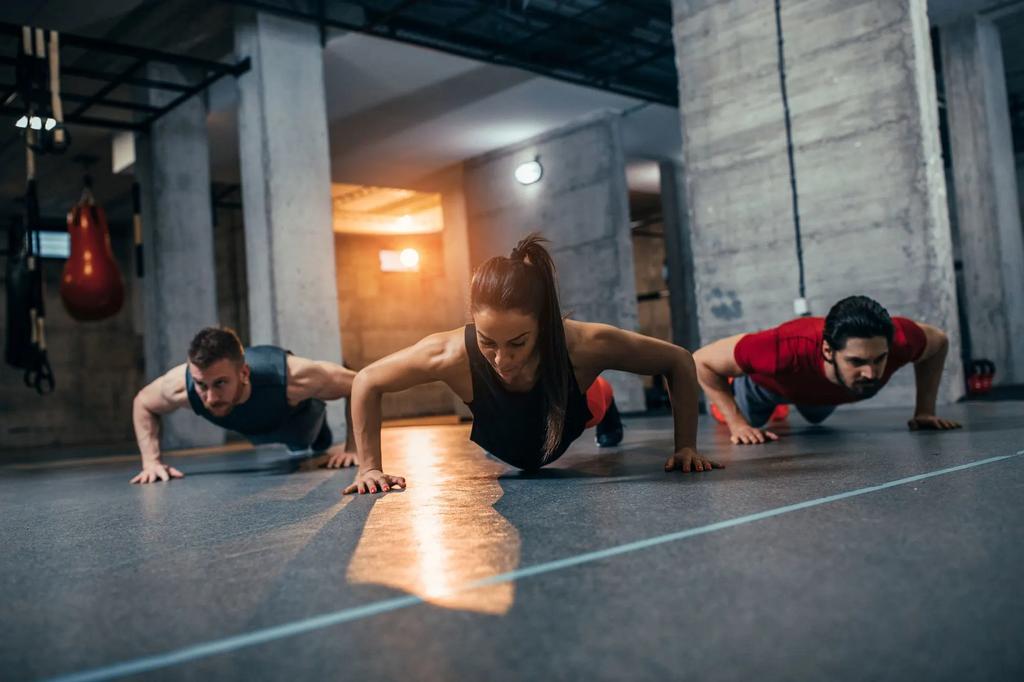
Quick List of Exercises That Start With A
If you need a quick list, here are 20 exercises and activities that start with A:
- Air Squats
- Alternating Lunges
- Abdominal Crunches
- Ankle Raises
- Arm Circles
- Arm Swings
- Archer Push-Ups
- Arnold Press
- Assisted Pull-Ups
- Alligator Walks
- Ape Walks
- Around-the-World
- Agility Ladder Drills
- Assault Bike
- Aerobic Step-Ups
- Ankle Hops
- Alternating Shoulder Taps
- Abdominal Leg Raises
- Anti-Rotation Press
- Aquatic Exercises
The best exercise depends on your fitness level, goals, available equipment, and personal preferences.
Best Exercises That Start With A
1. Air Squats
Air squats are one of the simplest exercises that start with A.
They use your body weight instead of dumbbells or a barbell. Air squats mainly work the quadriceps, glutes, hamstrings, hips, and core.
How to Do Air Squats
- Stand with your feet about shoulder-width apart.
- Keep your chest comfortably upright.
- Push your hips backward as you bend your knees.
- Lower your body as far as you can while maintaining control.
- Push through your feet to return to standing.
- Repeat the movement.
Beginners can start with 8 to 12 repetitions.
Air squats are useful for warm-ups, beginner workouts, circuit training, and lower-body conditioning.
2. Alternating Lunges
Alternating lunges are a popular lower-body exercise.
They train one side of the body at a time, which can also challenge balance and coordination.
How to Do Alternating Lunges
Start by standing comfortably with your feet together or slightly apart.
Step forward with one foot. Bend both knees and lower your body in a controlled manner.
Push through the front foot to return to your starting position.
Repeat with the opposite leg.
Keep your upper body controlled and avoid rushing through the movement.
As you become stronger, you can make alternating lunges more challenging by holding dumbbells.
3. Abdominal Crunches
Abdominal crunches are a common core exercise.
They mainly train the abdominal muscles, especially the rectus abdominis.
How to Do Abdominal Crunches
Lie on your back with your knees bent and feet supported on the floor.
Place your hands lightly behind your head or across your chest.
Tighten your abdominal muscles and gently lift your upper back from the floor.
Avoid pulling your head or neck forward with your hands.
Slowly lower your upper body back toward the floor.
Controlled repetitions are more important than doing a large number of fast repetitions.
4. Ankle Raises
Ankle raises can help strengthen the lower legs and support ankle control.
The exact movement can vary. One common variation involves lifting the heels from the floor and then lowering them slowly.
How to Perform a Basic Ankle Raise
- Stand upright.
- Keep your feet comfortably positioned.
- Slowly raise your heels.
- Pause briefly at the top.
- Lower your heels under control.
- Repeat.
You can hold a stable surface for balance if necessary.
As you improve, you can perform the movement on one leg or add appropriate resistance.
5. Arm Circles
Arm circles are a simple mobility and warm-up exercise.
Stand upright with your arms extended out to your sides.
Move your arms in small circles. Gradually make the circles larger if the movement feels comfortable.
After several repetitions, change direction.
Arm circles require no equipment and can be performed almost anywhere.
They can be useful before an upper-body workout or as part of a general warm-up.
6. Arm Swings
Arm swings are another simple exercise that starts with A.
They are commonly used as a warm-up movement for the shoulders and upper body.
Stand comfortably and swing your arms forward and backward in a controlled manner.
Do not force your shoulders into uncomfortable positions.
The movement should feel smooth rather than aggressive.
7. Archer Push-Ups
Archer push-ups are a challenging variation of the traditional push-up.
During the movement, you shift more of your body weight toward one arm while the opposite arm remains more extended.
This increases the challenge for the chest, shoulders, triceps, and core.
Archer push-ups are usually better suited to people who already have good push-up strength.
Beginners can build strength with wall push-ups, incline push-ups, knee push-ups, or standard push-ups before attempting this variation.
8. Arnold Press
The Arnold press is a shoulder exercise usually performed with dumbbells.
It combines an overhead pressing movement with arm rotation.
How to Perform an Arnold Press
- Hold a dumbbell in each hand near your shoulders.
- Begin with your palms facing toward you.
- Press the dumbbells upward.
- Slowly rotate your hands as you press.
- Finish with your palms facing forward.
- Lower the dumbbells with control.
- Reverse the rotation as you return to the starting position.
Use a weight that allows you to maintain good technique.
The goal is controlled movement, not lifting the heaviest weight possible.
9. Assisted Pull-Ups
Assisted pull-ups help people practice the pull-up movement with additional support.
Assistance can come from a resistance band or an assisted pull-up machine.
Pull-ups primarily work the upper back and arms while also requiring core control.
Assisted pull-ups can be especially useful for people working toward their first unassisted pull-up.
Start with an appropriate level of assistance and gradually reduce the assistance as your strength improves.
10. Alligator Walks
Alligator walks are crawling-style bodyweight exercises.
They involve moving the body close to the floor while using the arms and legs.
The movement can challenge the shoulders, chest, core, hips, and legs.
Alligator walks also require coordination.
Because they can be demanding, beginners should start with a short distance and focus on controlled movement.
11. Ape Walks
Ape walks are animal-style movements inspired by the movement patterns of apes.
They involve supporting some body weight through the hands while moving the legs around or between the arms.
Ape walks can challenge several parts of the body at the same time.
They are often used in functional fitness, movement training, warm-ups, and conditioning.
Start slowly because the movement can feel unfamiliar if you have never performed crawling exercises.
12. Around-the-World Exercise
“Around-the-world” can describe several different exercises.
One common variation involves moving a weight around your body in a controlled circular motion.
Other versions may involve moving a leg or arm through a circular range of motion.
Because the name can refer to different exercises, always check which variation is being described before performing it.
The most important point is to use controlled movement and avoid swinging a weight quickly around your body.
13. Agility Ladder Drills
Agility ladder drills use a flat ladder placed on the ground.
The ladder creates spaces that can help organize footwork.
Common agility ladder patterns include:
- One-foot steps
- Two-foot steps
- Lateral steps
- Forward steps
- Side-to-side steps
- In-and-out patterns
- Quick feet drills
Agility ladder exercises can improve coordination, footwork, rhythm, and body control.
They are especially popular in sports training.
However, speed should not come before control. Beginners should first learn the foot pattern slowly.
14. Assault Bike
An assault bike is a stationary exercise bike that uses both the arms and legs.
The handles move back and forth as you pedal.
You can use an assault bike for steady cardio, interval training, conditioning, or short high-intensity sessions.
Because resistance can increase as you work harder, intense intervals can become challenging quickly.
Beginners should start with moderate effort and learn how the machine feels before attempting very hard intervals.
15. Aerobic Step-Ups
Aerobic step-ups involve stepping onto a stable platform and then stepping back down.
They can increase your heart rate while working the legs.
How to Perform Aerobic Step-Ups
- Stand in front of a stable step.
- Place one foot on the platform.
- Step upward.
- Bring the other foot onto the platform.
- Step back down carefully.
- Alternate your leading leg.
Choose a platform height that you can use safely.
If your balance is limited, use a lower step.
16. Ankle Hops
Ankle hops are small jumping movements that use the feet and lower legs.
They can challenge lower-body coordination and elasticity.
However, ankle hops are higher-impact than exercises such as walking or calf raises.
If you are new to exercise or uncomfortable with jumping, start with lower-impact exercises.
When performing ankle hops, focus on soft and controlled landings.
17. Alternating Shoulder Taps
Alternating shoulder taps begin in a plank position.
From the plank, lift one hand and gently touch the opposite shoulder.
Return the hand to the floor and repeat on the other side.
The movement trains the shoulders and arms while requiring the core to control the body.
Beginners can perform shoulder taps with their hands on a stable elevated surface.
18. Abdominal Leg Raises
Abdominal leg raises are commonly used as a core exercise.
Lie on your back and raise your legs in a controlled manner.
Then slowly lower them.
The exercise becomes more challenging as the legs approach the floor.
Do not allow your lower back to move into an uncomfortable position.
If you cannot control the movement, bend your knees or reduce the range of motion.
19. Anti-Rotation Press
The anti-rotation press is a core exercise commonly performed with a resistance band or cable machine.
Unlike exercises where the goal is to rotate the body, the goal here is to resist rotation.
Stand sideways to the resistance source.
Hold the handle or band near your chest.
Press your hands forward while keeping your torso stable.
Return your hands toward your chest and repeat.
This exercise can train the core’s ability to stabilize the trunk.
20. Aquatic Exercises
Aquatic exercises are activities performed in water.
Examples include:
- Water walking
- Water jogging
- Aqua aerobics
- Water leg exercises
- Water resistance movements
- Swimming-related conditioning
Water provides resistance while also reducing some of the impact associated with certain land-based exercises.
Aquatic exercise can therefore be an appealing option for people who prefer lower-impact movement.
Exercises That Start With A for Beginners
If you are new to exercise, you do not need to start with difficult A exercises.
Good beginner choices can include:
- Arm circles
- Arm swings
- Air squats
- Alternating lunges
- Aerobic step-ups
- Assisted pull-ups
- Gentle abdominal exercises
Start with a small number of repetitions.
For example, you could perform 8 to 10 air squats, 6 to 8 alternating lunges per side, 10 arm circles in each direction, and 8 controlled step-ups per side.
Rest whenever needed.
As your fitness improves, you can slowly increase repetitions, resistance, or exercise difficulty.
Exercises That Start With A for Strength
If your goal is strength, several A exercises can be useful.
Examples include:
- Air squats
- Archer push-ups
- Arnold presses
- Assisted pull-ups
- Anti-rotation presses
- Alternating lunges
- Abdominal exercises
Strength training works best when the challenge gradually increases over time.
You can increase the difficulty by adding resistance, changing the exercise variation, increasing repetitions, or improving your range of motion.
The appropriate method depends on your fitness level and goals.
Exercises That Start With A for Cardio
If you want A exercises that can raise your heart rate, consider:
- Assault bike workouts
- Aerobic step-ups
- Agility drills
- Ape walks
- Ankle hops
- Aquatic aerobic exercises
Cardio intensity is different for each person.
An activity that feels easy to one person may feel difficult to another.
Start at an intensity you can control and gradually increase your effort.
Exercises That Start With A for Core Strength
Several A exercises can be included in a core workout.
Examples include:
- Abdominal crunches
- Abdominal leg raises
- Anti-rotation presses
- Alternating shoulder taps
- Alligator walks
- Ape walks
Core training is not limited to traditional abdominal exercises.
Your core also helps stabilize your body while your arms and legs move.
Exercises such as shoulder taps and anti-rotation presses can therefore provide a different type of core challenge.
Exercises That Start With A for Leg Strength
For the legs, useful choices include:
- Air squats
- Alternating lunges
- Aerobic step-ups
- Ankle raises
- Ankle hops
- Ape walks
Squats and lunges are particularly useful because they involve movement patterns that are similar to everyday activities such as sitting, standing, stepping, and climbing.
Exercises That Start With A for Upper-Body Strength
Upper-body A exercises include:
- Archer push-ups
- Arnold presses
- Assisted pull-ups
- Arm circles
- Arm swings
- Alternating shoulder taps
Not all of these exercises are designed primarily for strength.
Arm circles and arm swings are more commonly used for mobility and warm-ups.
Archer push-ups, Arnold presses, and assisted pull-ups provide a more direct strength challenge.
Exercises That Start With A Without Equipment
You can perform many A exercises without a gym or expensive equipment.
Examples include:
- Air squats
- Alternating lunges
- Arm circles
- Arm swings
- Archer push-ups
- Alligator walks
- Ape walks
- Alternating shoulder taps
- Abdominal crunches
- Abdominal leg raises
Bodyweight exercises can be useful for home workouts.
The key is to select movements that are appropriate for your fitness level and to perform them with good control.
Exercises That Start With A Using Equipment
Equipment gives you even more options.
| Exercise | Possible Equipment |
| Arnold press | Dumbbells |
| Assisted pull-up | Resistance band or pull-up machine |
| Anti-rotation press | Cable machine or resistance band |
| Assault bike | Air bike |
| Around-the-world | Dumbbell or kettlebell |
| Aerobic step-up | Step platform |
| Aquatic exercise | Swimming pool |
You do not need all of this equipment.
Choose tools that match your goals, available space, and experience.
A Simple Workout Using Exercises That Start With A
You can build a basic full-body workout using several A exercises.
Warm-Up
Start with:
- Arm circles for 30 seconds
- Arm swings for 30 seconds
- Easy walking for several minutes
The purpose of the warm-up is to gradually prepare your body for exercise.
Main Workout
Try:
- Air squats — 8 to 12 repetitions
- Alternating lunges — 6 to 10 repetitions per side
- Alternating shoulder taps — 6 to 10 repetitions per side
- Aerobic step-ups — 8 to 10 repetitions per side
- Abdominal crunches — 8 to 12 repetitions
Rest between exercises when necessary.
If the workout feels manageable, you can repeat the circuit one or two additional times.
Cool-Down
Finish with several minutes of easy movement.
You can also perform gentle mobility exercises.
Avoid forcing a stretch into pain.
How Many Exercises Should You Do?
There is no universal number of exercises that everyone should perform.
A beginner may only need a few movements during one workout.
Five exercises can be enough for a short full-body session.
A more experienced exerciser may use additional exercises to target different muscles and movement patterns.
The goal should not be to collect as many exercises as possible.
A balanced workout that you can perform consistently is usually more useful than an extremely long workout.
How Often Should You Exercise?
Adults should aim to include both aerobic activity and muscle-strengthening activity throughout the week.
A common weekly goal is at least 150 minutes of moderate aerobic activity or 75 minutes of vigorous aerobic activity, along with muscle-strengthening activity on at least two days.
You can divide exercise across several days.
For example:
- Monday: Cardio
- Tuesday: Strength training
- Wednesday: Light activity
- Thursday: Cardio
- Friday: Strength training
- Saturday: Cardio or recreational activity
- Sunday: Rest or light movement
Your schedule can be different.
The important thing is to create a routine that fits your lifestyle.
Benefits of Regular Exercise
Regular physical activity can provide many health benefits.
Potential benefits include:
- Better cardiovascular fitness
- Stronger muscles
- Improved physical function
- Stronger bones
- Better balance
- Better sleep
- Improved mood
- Better brain health
- Support for healthy weight management
- Reduced risk of several chronic health conditions
Exercise can also make everyday activities easier.
For example, stronger legs can make climbing stairs easier, while improved balance and coordination can help with daily movement.
Exercises That Start With A and Weight Management
A exercises can contribute to an active lifestyle, but no single exercise guarantees weight loss.
Body weight is influenced by many factors, including food intake, physical activity, sleep, genetics, medications, stress, and overall lifestyle.
Physical activity increases the amount of energy your body uses.
A combination of regular activity and appropriate nutrition can support healthy weight management.
The best exercise for this purpose is often one that you enjoy and can perform consistently.
How to Make A Exercises More Challenging
When an exercise becomes easy, you can gradually increase the challenge.
Possible methods include:
- Increase repetitions
- Add resistance
- Increase the range of motion
- Slow down the movement
- Improve technique
- Choose a harder variation
- Increase training volume gradually
- Reduce unnecessary rest periods
Do not change everything at once.
For example, if 10 air squats feel easy, you might first increase to 12 or 15 repetitions.
Later, you might try a more challenging squat variation or add resistance.
Common Mistakes When Doing A Exercises
Using Poor Form
Rushing through an exercise can make it harder to maintain control.
Focus on smooth and controlled repetitions.
Doing Too Much Too Soon
Trying to immediately copy an advanced athlete’s workout can be unnecessary and difficult.
Start at a level that matches your current fitness.
Ignoring Pain
Exercise can feel challenging, but sharp, severe, or unusual pain should not be ignored.
Stop an exercise if it causes concerning symptoms.
Skipping Preparation
A warm-up is not always long or complicated.
A few minutes of easy movement can help prepare you for more demanding activity.
Choosing Exercises Only Because They Sound Difficult
A harder exercise is not automatically a better exercise.
An easier exercise performed consistently and correctly can be much more useful.
Safety Tips for Exercises That Start With A
Safety should always come before intensity.
Use stable equipment and make sure you have enough space to move.
Wear appropriate footwear when necessary.
Learn the basic technique before adding weights or speed.
If you have a health condition, injury, disability, or other concern that may affect exercise, consider speaking with a qualified health professional before beginning a new or demanding program.
Stop exercising and seek appropriate medical attention if you experience serious symptoms such as severe chest pain, fainting, severe shortness of breath, or another urgent health problem.
Exercises That Start With A for Older Adults
Older adults can remain active by choosing exercises that match their abilities.
Possible options include:
- Assisted exercises
- Arm circles
- Air squats to a chair
- Aerobic walking
- Aquatic exercises
- Ankle raises
- Gentle balance exercises
A sturdy chair or other stable surface can sometimes provide support during standing exercises.
The goal should be safe, functional movement rather than trying to perform an advanced workout.
Older adults can benefit from combining aerobic activity, muscle strengthening, and balance-focused movement.
Exercises That Start With A for Athletes
Athletes can use A exercises as part of broader training programs.
Examples include:
- Agility ladder drills
- Ankle hops
- Assault bike intervals
- Ape walks
- Archer push-ups
- Alternating lunges
- Anti-rotation presses
However, athletic training should match the sport.
A soccer player, basketball player, runner, swimmer, and baseball player may have very different training requirements.
An exercise should therefore not be selected only because its name begins with A.
How to Choose the Best Exercise That Starts With A
Choosing the right exercise becomes easier when you ask a few simple questions.
What Is My Goal?
If your goal is strength, choose exercises that provide enough resistance.
If your goal is cardiovascular fitness, choose activities that safely raise your heart rate.
If your goal is mobility, focus on controlled movements through comfortable ranges of motion.
If your goal is coordination, agility and movement drills may be useful.
What Is My Fitness Level?
Beginners may prefer air squats, arm circles, step-ups, and assisted exercises.
Experienced exercisers may choose more demanding movements such as archer push-ups, ankle hops, or challenging agility drills.
What Equipment Do I Have?
Many A exercises require no equipment.
Others require dumbbells, resistance bands, cables, machines, a step platform, an exercise bike, or a swimming pool.
Choose what is practical for you.
What Do I Enjoy?
Enjoyment matters because consistency is important.
If you dislike an exercise, you may be less likely to continue doing it.
The best workout is not necessarily the most complicated workout.
It is a workout that matches your goals and that you can realistically maintain.
Frequently Asked Questions About Exercises That Start With A
What is the easiest exercise that starts with A?
Air squats, arm circles, and arm swings are among the easiest exercises that start with A. They require little or no equipment and can be modified for different fitness levels.
What is the best exercise that starts with A for beginners?
There is no single best exercise for every beginner. Air squats, alternating lunges, step-ups, arm circles, and gentle core exercises can all be useful starting options.
What A exercise works the whole body?
Alligator walks, ape walks, and some forms of aquatic exercise can involve multiple areas of the body. Their difficulty can vary, so beginners should start with easier versions.
Which A exercises can I do at home?
Many exercises that start with A can be done at home, including air squats, alternating lunges, arm circles, arm swings, abdominal crunches, shoulder taps, and alligator walks.
Can exercises that start with A help build muscle?
Yes. Some A exercises can support muscle development, particularly resistance exercises such as Arnold presses, assisted pull-ups, archer push-ups, and challenging lower-body exercises. Muscle development also depends on training consistency, resistance, recovery, nutrition, and an appropriate progression.
Additional Questions About Exercises That Start With A
Are A exercises suitable for children?
Some basic A exercises can be suitable for children when they are age-appropriate and performed safely.
Children generally benefit from active play, sports, running, jumping, climbing, and other enjoyable forms of movement.
Exercises should be adapted to the child’s age, skill level, and physical development.
Can I use A exercises for a full-body workout?
Yes.
You can combine a lower-body exercise such as air squats, an upper-body movement such as assisted pull-ups, a core exercise such as shoulder taps, and a cardiovascular activity such as step-ups or an assault bike.
The important thing is to include a variety of movements rather than focusing only on the letter A.
Are exercises that start with A good for weight loss?
They can be part of a healthy physical activity routine.
However, weight loss is not determined by the first letter of an exercise.
Walking, cycling, swimming, resistance training, running, and many other forms of activity can support weight management when combined with appropriate nutrition and lifestyle habits.
How can I progress from air squats to harder exercises?
Start by learning proper air squat technique.
Once the movement feels comfortable, you can gradually increase repetitions or try more challenging variations.
Possible progressions include pause squats, split squats, jump squats, or loaded squats.
Progress gradually and only when you can control the easier movement.
Do I need a gym to perform A exercises?
No.
Many exercises beginning with A can be performed at home without equipment.
A gym can provide additional options such as dumbbells, barbells, cable machines, pull-up machines, exercise bikes, and other equipment.
Conclusion
Exercises that start with A offer a surprisingly large variety of fitness options.
From simple air squats and arm circles to challenging archer push-ups, Arnold presses, assisted pull-ups, agility drills, and assault bike workouts, there are options for beginners and experienced exercisers alike.
The best exercise is not necessarily the hardest exercise.
Instead, choose movements that match your goals, fitness level, available equipment, and personal preferences.
A balanced routine can include strength training, cardiovascular activity, mobility work, balance exercises, and core training.
Whether you are searching for exercises that start with A for a school project, fitness challenge, workout plan, vocabulary list, or personal training routine, the key is to focus on safe and consistent movement.
Start with exercises you can perform comfortably, learn good technique, and gradually increase the challenge as your fitness improves.
The letter A may be where your search begins, but the real goal is building an active lifestyle that you can maintain over time.
