

Leg strength is an important part of healthy aging. Strong legs can make everyday activities such as walking, climbing stairs, getting out of a chair, carrying groceries, and getting in and out of a car easier.
As people get older, muscle strength and physical power can gradually decline. This does not mean that losing strength is unavoidable or that older adults cannot become stronger. Regular physical activity, including resistance and balance exercises, can help older adults maintain or improve strength and physical function. Research supported by the National Institute on Aging has found that strength training can help older adults maintain muscle mass, improve mobility, and support independence.
This guide explains leg exercises for seniors that can be adapted for different fitness levels. It covers simple exercises that can be performed at home, ways to use a chair or resistance band for support, common mistakes, safety considerations, and how to build a practical weekly routine.
The goal is not to exercise as hard as possible. The goal is to move safely, consistently, and in a way that supports everyday life.
What Are Leg Exercises for Seniors?
Leg exercises for seniors are physical activities designed to strengthen or improve the muscles, joints, balance, coordination, and movement ability of older adults.
These exercises can target several areas of the lower body, including:
- Quadriceps at the front of the thighs
- Hamstrings at the back of the thighs
- Gluteal muscles in the hips and buttocks
- Calf muscles
- Hip muscles
- Muscles that help stabilize the knees and ankles
Good senior leg workouts do not have to involve heavy weights or complicated gym equipment. Body-weight exercises, resistance bands, walking, chair exercises, and controlled movements can all be useful.
The best exercises depend on a person’s current fitness level, health conditions, balance, mobility, and goals.
Why Is Leg Strength Important for Seniors?
Leg strength is closely connected to independence.
Consider a normal day. You may need to stand up from a chair, walk across a parking lot, step onto a curb, climb a few stairs, or carry a bag from the grocery store. These activities require your legs and hips to produce and control force.
Strong legs can make these movements easier.
Physical activity can also improve physical function and help older adults continue performing daily tasks independently. The National Institute on Aging notes that regular activity can make activities such as getting into or out of a bed or chair and moving around the neighborhood easier.
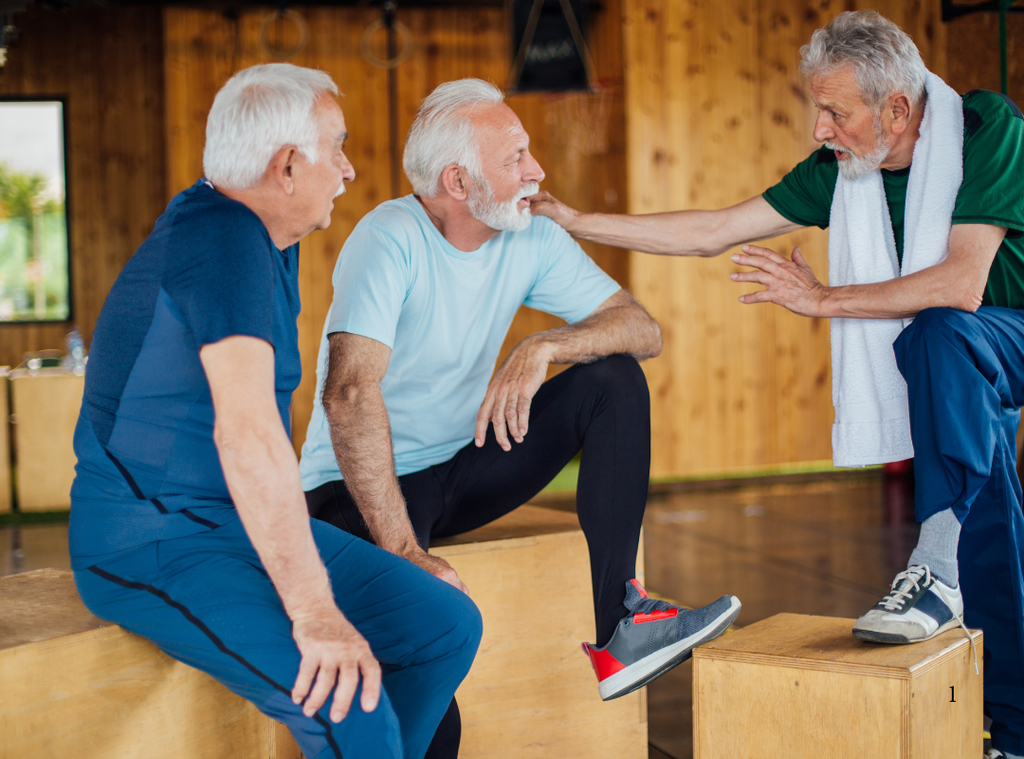
Leg strengthening may also be particularly useful because muscle strength and power can decline with age. However, regular exercise can slow this decline, and many older adults can increase their strength with appropriate training.
Benefits of Leg Strengthening Exercises for Seniors
Regular leg exercises may provide several important benefits.
1. Better Everyday Mobility
Walking, standing, bending, and climbing stairs all require lower-body strength.
Exercises that strengthen the thighs, hips, and calves can help make these activities more manageable.
2. Easier Chair Transfers
Standing up from a chair is a simple movement, but it requires strength from the thighs and hips.
Chair stands are therefore a useful functional exercise for many older adults.
3. Improved Balance
Leg strength is only one part of balance, but it can contribute to better control when standing and walking.
Older adults are encouraged to include balance activities along with aerobic and muscle-strengthening exercises.
4. Support for Fall Prevention
Falls are an important health concern for older adults. Strength and balance training can help improve physical function and may reduce fall risk.
The National Institute on Aging recommends combining strength and balance activities as part of a healthy activity routine.
5. Support for Bone Health
Weight-bearing activities such as walking and stair climbing place useful mechanical demands on bones.
For people with osteoporosis or low bone density, however, exercise should be selected carefully with guidance from a health professional when appropriate.
6. Greater Confidence
When everyday movements become easier, some people feel more confident about walking, shopping, traveling, or participating in social activities.
Confidence should not replace safety, but appropriate exercise can help people feel more capable in daily life.
7. Support for Healthy Aging
Physical activity is associated with many health benefits in older adults, including improved physical function and a lower risk of several chronic health problems.
10 Effective Leg Exercises for Seniors
The following exercises can be adapted for beginners and more experienced older adults.
Start with exercises that feel manageable. Quality of movement is more important than doing many repetitions.
1. Chair Stands
Chair stands are one of the most practical leg exercises for seniors because they closely resemble an everyday movement.
How to do them:
- Sit near the front of a sturdy chair.
- Place both feet flat on the floor.
- Keep your feet about hip-width apart.
- Lean forward slightly from your hips.
- Push through your feet and stand up.
- Pause briefly.
- Slowly lower yourself back into the chair.
Use your hands on the chair or another stable support if needed.
Start with 5 to 8 repetitions. Over time, you may work toward 8 to 12 repetitions if the movement feels comfortable.
Chair stands primarily challenge the thighs and hip muscles.
2. Supported Squats
A supported squat is a modified version of a traditional squat.
Stand behind a sturdy chair and hold it lightly for support.
How to do it:
- Stand tall with your feet comfortably apart.
- Hold the chair for balance.
- Bend your knees and hips slowly.
- Lower your body only as far as comfortable.
- Keep your chest lifted.
- Push through your feet to return to standing.
Do not force a deep squat. A shallow movement can still provide a useful challenge.
The goal is controlled movement rather than speed.
3. Calf Raises
Calf raises are simple exercises for strengthening the lower legs.
How to do them:
- Stand behind a sturdy chair or near a countertop.
- Place your hands on the support.
- Keep your feet flat.
- Slowly raise your heels so you stand on the balls of your feet.
- Pause briefly.
- Slowly lower your heels.
Try 8 to 12 repetitions.
As strength improves, you can gradually increase repetitions or add gentle resistance under professional guidance.
4. Seated Knee Extensions
This exercise is useful for people who prefer to exercise while seated.
How to do it:
- Sit upright in a sturdy chair.
- Keep one foot flat on the floor.
- Slowly straighten the other knee.
- Lift the lower leg until the leg is comfortably extended.
- Pause briefly.
- Lower the foot slowly.
- Repeat with the other leg.
Avoid snapping or locking the knee.
This exercise focuses on the muscles at the front of the thigh.
5. Seated Marching
Seated marching can provide a simple lower-body workout while also encouraging hip movement.
How to do it:
- Sit upright in a stable chair.
- Keep your back comfortably straight.
- Lift one knee toward your chest without leaning backward.
- Lower it.
- Lift the opposite knee.
- Continue alternating.
Move slowly at first.
You can use seated marching as a warm-up or as part of a chair-based exercise routine.
6. Standing Hip Abduction
Hip abduction works muscles on the outside of the hip that contribute to lower-body stability.
How to do it:
- Stand behind a sturdy chair.
- Hold the chair with one or both hands.
- Keep your upper body upright.
- Move one leg slowly out to the side.
- Do not twist your body.
- Return the leg to the starting position.
- Repeat on the other side.
Keep the movement controlled.
You do not need to lift the leg very high.
7. Standing Hip Extension
Hip extension targets muscles around the back of the hip.
How to do it:
- Stand behind a sturdy chair.
- Hold the chair for balance.
- Keep your body upright.
- Slowly move one leg backward.
- Avoid leaning forward.
- Return the leg to the starting position.
- Repeat with the other leg.
Small, controlled movements are enough.
8. Step-Ups
Step-ups can imitate the movement needed for climbing stairs.
However, they require good balance and should only be performed when the person can use a secure step and stable support.
How to do them:
- Stand near a sturdy step or low platform.
- Hold a secure handrail if available.
- Place one foot on the step.
- Push through that foot to step up.
- Bring the other foot up.
- Step down slowly and carefully.
- Repeat with the opposite leg when appropriate.
Start with a low step.
If you have significant balance problems, ask a physical therapist or other qualified professional whether step-ups are appropriate.
9. Hamstring Curls
Hamstring curls involve bending the knee and bringing the heel toward the back of the leg.
How to do them:
- Stand behind a sturdy chair.
- Hold the chair for support.
- Bend one knee and bring the heel upward.
- Keep your thighs relatively still.
- Lower the foot slowly.
- Repeat on the other side.
The movement does not need to be large.
10. Heel-to-Toe Walking
Heel-to-toe walking is more focused on balance than strength, but it can be useful as part of a complete lower-body routine.
Stand near a wall, counter, or sturdy support.
Slowly place the heel of one foot directly in front of the toes of the other foot. Continue taking controlled steps.
Do not perform this exercise in an area where a fall could cause injury.
If you feel unstable, stop and use a more secure balance exercise.
Best Leg Strengthening Exercises for Seniors at Home
Many older adults do not need a gym to work on leg strength.
A home routine can include:
- Chair stands
- Supported squats
- Calf raises
- Seated knee extensions
- Seated marching
- Hip abduction
- Hip extension
- Hamstring curls
- Walking
- Step-ups when appropriate
A sturdy chair can provide useful support during many exercises.
Resistance bands can also be used for certain movements. The National Institute on Aging lists resistance bands, weights, weight machines, and body-weight exercises as examples of muscle-strengthening activities for older adults.
The important point is not the equipment. It is the appropriate level of resistance and controlled movement.
What Is a Good Leg Exerciser for Seniors?
The phrase “leg exerciser for seniors” can refer to many types of equipment.
Common options include:
- Pedal exercisers
- Stationary bicycles
- Resistance bands
- Ankle weights
- Seated pedal machines
- Resistance machines
- Step platforms
- Recumbent exercise bikes
A seated pedal exerciser may appeal to someone who wants a low-impact option while sitting.
Resistance bands can provide adjustable resistance without requiring heavy equipment.
A stationary or recumbent bicycle can provide aerobic activity while also using the leg muscles.
The right equipment depends on the user’s goals and physical ability.
For someone who has difficulty standing safely, seated equipment may be more practical. For someone who wants to improve functional strength for stairs and chair transfers, controlled standing exercises may be more directly relevant.
A machine is not automatically better than a simple body-weight exercise.
Leg Exercises for Seniors With Limited Mobility
Limited mobility does not mean that exercise is impossible.
Some exercises can be performed while seated.
Examples include:
- Seated marching
- Seated knee extensions
- Ankle pumps
- Seated heel raises
- Seated toe raises
- Gentle leg straightening
- Seated hip movements
The range of motion can be small.
For someone with significant mobility limitations, a physical therapist can create an individualized exercise program based on strength, balance, joint movement, and medical history.
The National Institute on Aging notes that people with chronic conditions can often benefit from physical activity, but the activity should be appropriate for their condition and abilities.
Leg Exercises for Seniors With Knee Arthritis
Knee arthritis can make exercise uncomfortable, but discomfort does not always mean that movement should be avoided.
Low-impact activities and appropriately selected strengthening exercises may help maintain function.
Examples that may be considered include:
- Seated knee extensions
- Chair stands
- Gentle walking
- Seated marching
- Calf raises
- Hip strengthening exercises
However, the right exercise program varies from person to person.
If an exercise produces significant or persistent pain, stop and discuss it with a health professional.
The goal is to build useful strength without repeatedly irritating the joint.
Leg Strength Exercises for Seniors With Balance Concerns
Balance concerns require extra attention.
A person who is unsteady should not perform standing exercises in an open area without support.
Use:
- A sturdy chair
- A secure countertop
- A wall
- A stable handrail
- Another appropriate support
Avoid using a lightweight chair that can slide.
The National Institute on Aging recommends having a sturdy chair, person, or wall nearby when practicing balance exercises.
For people with repeated falls or major balance problems, professional assessment can be valuable.
A physical therapist can identify specific weaknesses and recommend exercises that match the person’s abilities.
How Often Should Seniors Do Leg Exercises?
There is no single schedule that works for everyone.
U.S. physical activity guidelines recommend that adults perform muscle-strengthening activities involving the major muscle groups at least two days per week. Older adults should also include balance activities as part of a broader combination of aerobic, strengthening, and balance exercise.
The National Institute on Aging similarly recommends muscle-strengthening activity at least two days per week and suggests balance activities about three times per week.
A beginner might start with two short leg-strength sessions each week.
For example:
Monday: Leg strength
Tuesday: Walking or another comfortable aerobic activity
Wednesday: Balance and light movement
Thursday: Rest or gentle walking
Friday: Leg strength
Saturday: Walking, swimming, or another enjoyable activity
Sunday: Gentle movement or rest
This is only an example. Exercise schedules should be adjusted for individual needs.
How Many Repetitions Should Seniors Do?
For general strength training, the National Institute on Aging notes that one set of 8 to 12 repetitions can be effective, while two or three sets may provide additional benefit. Beginners may start without weights or resistance until they are comfortable with the movement.
However, a senior beginner does not have to immediately complete 8 to 12 repetitions.
Starting with 5 repetitions may be reasonable for some people.
The important progression is:
- Learn the movement.
- Perform it safely.
- Build consistency.
- Gradually increase repetitions or resistance.
- Allow recovery.
More is not always better.
Should Seniors Exercise Their Legs Every Day?
Some types of leg movement can be done daily, but intense strength training for the same muscle group does not necessarily need to happen every day.
Muscles need time to recover after challenging strength exercises.
Light activities such as walking, gentle mobility exercises, and comfortable stretching can often be incorporated more frequently.
A practical approach is to combine different types of movement throughout the week.
For example, strength exercises can be performed two or more days per week, while walking and gentle movement can occur on many other days.
How Much Walking Should Seniors Do?
Walking is one of the simplest forms of physical activity.
The Physical Activity Guidelines for Americans recommend 150 to 300 minutes of moderate-intensity aerobic activity per week for adults, or an equivalent combination of moderate and vigorous activity. Older adults should also include muscle-strengthening and balance activities.
However, someone who is currently inactive does not have to begin with 150 minutes.
The guidelines emphasize that some physical activity is better than none, and people who cannot meet the full target because of chronic conditions should be as active as their abilities and conditions allow.
A short walk around the house can be a starting point.
Over time, walking duration can gradually increase.
A Simple 15-Minute Leg Workout for Seniors
A short workout can be easier to maintain than a long routine.
Try this example:
Warm-Up: 3 Minutes
Begin with:
- Seated marching
- Gentle ankle movements
- Easy walking around the room
Strength: 8 Minutes
Perform:
- Chair stands: 5 to 10 repetitions
- Calf raises: 8 to 12 repetitions
- Seated knee extensions: 8 to 12 per leg
- Standing hip abduction: 8 to 12 per leg
Rest as needed.
Balance and Cool-Down: 4 Minutes
Finish with:
- Supported standing
- Gentle heel-to-toe practice if appropriate
- Easy walking
- Comfortable leg stretches
This routine is only a general example. It should be modified for individual ability.
A Beginner Leg Workout for Seniors
A beginner can start even more simply.
Try:
- Seated marching for 30 seconds
- Chair stands for 5 repetitions
- Seated knee extensions for 5 repetitions per leg
- Calf raises for 5 repetitions
- Gentle walking for several minutes
Rest whenever needed.
After several sessions, gradually increase repetitions if the exercises remain comfortable.
The objective is to create a routine that can be repeated consistently.
How to Progress Leg Exercises for Seniors
Progression does not always mean lifting heavier weights.
You can make an exercise more challenging by:
- Adding repetitions
- Adding another set
- Using a stronger resistance band
- Adding light resistance
- Increasing the range of motion when appropriate
- Improving control
- Reducing the amount of hand support when safe
- Performing a movement more slowly
Only change one factor at a time.
For example, if 8 chair stands become easy, you might increase to 10 before adding resistance.
Gradual progression helps reduce the chance of doing too much too quickly.
Common Mistakes Seniors Should Avoid
Doing Too Much Too Soon
Starting with a demanding workout can lead to excessive soreness or injury.
Begin with manageable movements.
Holding Your Breath
Breathing should remain comfortable during exercise.
The National Institute on Aging advises older adults not to hold their breath during strength exercises.
Moving Too Quickly
Fast movements can make it harder to maintain control.
Slow, deliberate repetitions are often more useful for learning an exercise.
Using an Unstable Chair
Do not use a chair that rolls, slides, or feels weak.
A stable support is important for standing exercises.
Ignoring Pain
Muscle effort can feel challenging, but sharp, severe, or unusual pain should not be ignored.
Stop the exercise and seek appropriate medical advice when necessary.
Comparing Yourself With Other People
Fitness levels vary widely among older adults.
A 70-year-old who exercises regularly may have very different abilities from an 80-year-old who has been inactive or has mobility limitations.
Progress should be personal.
Safety Tips for Leg Exercises for Seniors
Safety should come before intensity.
Before starting a new exercise program, consider discussing your plans with a doctor or qualified health professional, especially if you have a medical condition, recent injury, major balance problems, or significant mobility limitations.
The National Institute on Aging recommends discussing exercise with a doctor when chronic conditions affect the ability to exercise safely.
Additional safety tips include:
- Exercise in a clear area.
- Keep a stable support nearby.
- Wear comfortable, stable footwear.
- Start slowly.
- Warm up before more demanding exercise.
- Avoid sudden movements.
- Do not hold your breath.
- Stop if you feel unusually dizzy or unwell.
- Give muscles time to recover.
- Stay hydrated as appropriate.
- Use equipment according to its instructions.
If you experience chest pain, severe shortness of breath, fainting, sudden weakness, or another emergency symptom, stop exercising and seek urgent medical help.
When Should Seniors Talk to a Doctor Before Exercising?
Professional advice is especially important when someone has:
- A recent surgery
- A recent fracture
- Serious balance problems
- Repeated falls
- Significant joint pain
- A heart or lung condition
- Severe osteoporosis
- A neurological condition affecting movement
- A major change in exercise tolerance
People with chronic health conditions are not necessarily unable to exercise. In many cases, physical activity can be adapted to their abilities. The National Institute on Aging recommends creating an activity plan that accounts for the person’s health condition.
Leg Exercises for Seniors With Osteoporosis
Osteoporosis requires special consideration because bones are weaker and fractures can occur more easily.
Walking and other weight-bearing activities may be beneficial for bone health, while strength and balance exercises can support muscles and help reduce fall risk.
However, not every exercise is appropriate for every person with osteoporosis.
A doctor or physical therapist can help determine whether certain bending, twisting, impact, or resistance exercises are appropriate.
Avoid copying advanced exercise routines from the internet without considering your individual bone health.
Can Leg Exercises Help Seniors Stay Independent?
Yes, maintaining physical function is one of the most important reasons to exercise as you age.
Strong legs can support activities such as:
- Getting out of bed
- Standing from a chair
- Walking to the mailbox
- Climbing stairs
- Shopping
- Carrying light groceries
- Getting into a vehicle
- Moving around the home
The National Institute on Aging identifies maintaining physical function and independence as important benefits of physical activity for older adults.
This is why functional exercises can be especially valuable.
The purpose is not simply to make a muscle stronger in isolation. It is to help the body perform useful movements in everyday life.
Exercises for Legs for Seniors: Strength Versus Balance
Strength and balance are related, but they are not the same.
Strength exercises challenge muscles.
Balance exercises challenge the body’s ability to control its position.
For example:
- Chair stands are primarily a strength exercise.
- Calf raises can provide strength and some stability challenge.
- Heel-to-toe walking is primarily a balance exercise.
- Walking can provide aerobic activity and some balance practice.
A well-rounded program includes multiple types of activity.
U.S. guidance recommends that older adults use a combination of aerobic, muscle-strengthening, and balance activities.
Do Seniors Need Weights to Build Leg Strength?
No.
Body-weight movements can provide resistance.
Examples include:
- Chair stands
- Squats
- Step-ups
- Calf raises
Resistance bands can also be useful.
Weights may become helpful as strength improves, but they are not required for everyone.
If you use weights, start with an amount that allows you to maintain good control.
How Can Seniors Make Exercise a Habit?
Consistency is often more important than having a perfect workout.
A few practical ideas can help.
Choose a Regular Time
Exercising at the same time each day or on the same days each week can make the habit easier to remember.
Keep Equipment Visible
A resistance band or exercise chair placed in an appropriate area can serve as a reminder.
Start Small
A five- or ten-minute session may be easier to maintain than an ambitious one-hour plan.
Connect Exercise to Daily Life
Try standing several times during the day, walking around the home, taking stairs when safe, or doing gentle movement while watching television.
Choose Activities You Enjoy
Exercise does not have to feel like punishment.
Walking with a friend, dancing, gardening, or joining a senior fitness class can make physical activity more enjoyable.
The National Institute on Aging emphasizes that enjoyable activities can make it easier to stay active over time.
What Does a Complete Weekly Exercise Plan Look Like?
A balanced weekly plan can combine several types of activity.
For example:
Monday:
Leg strengthening and short walking session
Tuesday:
Walking and balance exercises
Wednesday:
Light movement and flexibility
Thursday:
Leg strengthening
Friday:
Walking or another aerobic activity
Saturday:
Balance practice and enjoyable physical activity
Sunday:
Rest or gentle movement
This is not a medical prescription.
The right amount of exercise depends on fitness level, health, goals, and experience.
For general health, U.S. guidelines recommend 150 to 300 minutes of moderate aerobic activity each week, muscle-strengthening activity on at least two days, and multicomponent activity including balance for older adults.
How Long Does It Take to Improve Leg Strength?
There is no exact timeline.
Some people notice that movements feel easier after several weeks of consistent exercise. Measurable strength improvements can take longer.
Progress depends on:
- Starting fitness level
- Age
- Exercise consistency
- Nutrition
- Sleep
- Health conditions
- Exercise intensity
- Recovery
Avoid judging progress only by appearance.
Useful signs of progress may include:
- Standing from a chair more easily
- Walking longer
- Climbing stairs with less effort
- Feeling steadier
- Completing more repetitions
- Needing less support
These functional improvements can be more meaningful than changes in muscle size.
Frequently Asked Questions About Leg Exercises for Seniors
1. What is the safest leg exercise for seniors who are new to exercise?
Chair stands are often a practical starting point because they train a movement used in everyday life. However, the safest exercise depends on the person’s balance, mobility, strength, and health. Someone with significant weakness or balance problems may need seated exercises or professional guidance first.
2. Are leg exercises safe for seniors over 80?
Age alone does not determine whether someone can exercise. Many adults in their 80s and beyond can benefit from physical activity. The exercises should match the person’s abilities, and people with medical conditions or major mobility limitations may benefit from professional guidance.
3. Can seniors use resistance bands instead of weights?
Yes. Resistance bands are one option for muscle-strengthening activity and can provide adjustable resistance. Beginners should start with manageable resistance and learn proper movement before progressing.
4. Should seniors exercise their legs if they have weak knees?
Weak knees do not automatically mean that exercise should be avoided. Strengthening the muscles around the hips and legs may support function, but the appropriate exercises depend on the cause of the weakness and any pain or medical condition. A doctor or physical therapist can help determine the best approach.
5. What should a senior do if they feel unsteady during a leg exercise?
Stop the movement and use a secure support. Do not continue an exercise that makes you feel at risk of falling. A sturdy chair, wall, or handrail can provide support during some exercises. If balance problems are frequent or new, discuss them with a health professional. The National Institute on Aging recommends professional evaluation for people who have balance concerns.
Conclusion
Leg exercises for seniors can play an important role in healthy aging. Stronger legs can support walking, standing, climbing stairs, getting out of a chair, and many other everyday activities.
The best routine does not have to be complicated. Simple exercises such as chair stands, calf raises, seated knee extensions, supported squats, hip exercises, and walking can form the foundation of an effective lower-body routine.
The most important principles are safety, consistency, gradual progression, and choosing exercises that match your current abilities.
Older adults should also remember that leg strength is only one part of physical fitness. A complete activity plan includes aerobic movement, muscle strengthening, balance, and flexibility. Current guidance from U.S. health authorities supports this combination as part of healthy aging.
If you are starting after a long period of inactivity, begin slowly. If you have a medical condition, significant pain, recent injury, or balance problems, speak with an appropriate health professional before beginning or changing your exercise routine.
Healthy aging is not about competing with someone else. It is about maintaining the ability to move, participate, and live as independently as possible. Small amounts of regular movement can become meaningful progress when they are continued over time.
