
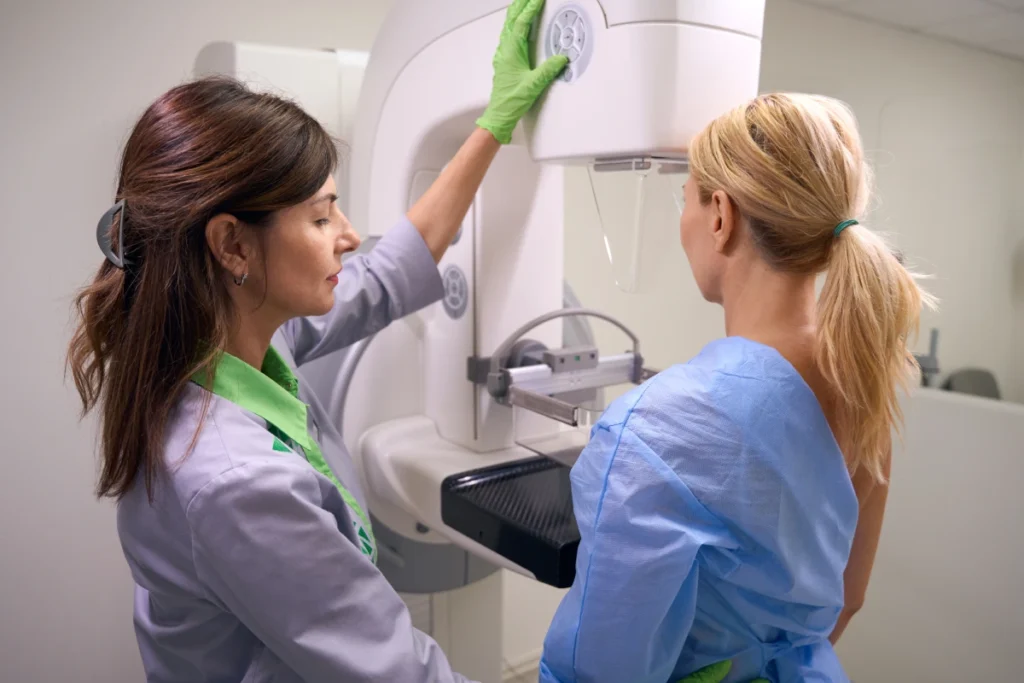
Breast health screenings with mammograms use specialized imaging to examine breast tissue, looking for any unusual changes. They are performed in both screening and diagnostic contexts. They offer clinicians detailed images that help monitor breast health and guide further assessment when needed.
What Is a Mammogram?
A mammogram uses low-dose X-rays to capture images of the breast. Its primary purpose is to detect abnormalities that may not be noticeable during a physical examination. Mammography is performed by placing the breast between two plates on a specialized X-ray machine. The plates compress the breast tissue briefly, allowing for clearer images with minimized radiation exposure. There are two main categories of mammograms.
Screening Mammograms
Screening mammograms help identify potential breast health concerns at an early stage. During the procedure, images are generally captured from different angles for each breast. Screenings are most often part of routine health maintenance for women who have no signs or symptoms of breast changes.
Diagnostic Mammograms
A diagnostic mammogram is performed when there are symptoms such as a lump, pain, nipple discharge, or if a recent screening mammogram has identified an area of concern. Diagnostic mammograms involve additional images or specialized views, providing greater detail of specific areas within the breast. Technicians may use magnification or compression in targeted locations. This is to better evaluate suspicious findings.
Why Is One Necessary?
Mammograms are a primary method used by healthcare providers to evaluate the internal structure of the breast. They assist in detecting various forms of tissue changes, including masses and distortions. Masses detected on a mammogram can range from cysts to solid tumors. The shape, size, and edges of any abnormal tissue provide additional detail to assist physicians in determining whether further steps should be taken. Mammograms also enable comparison of current and prior images.
What Should You Expect?
Knowing how a mammogram is performed can help provide clarity about the process. Some preparation steps are recommended for the day of the exam. On the day of the appointment, avoid using deodorant, antiperspirant, lotion, or powder on or around the breast and underarm area. Products such as these may contain tiny metallic particles, which can appear as spots on the X-ray images and potentially interfere with their interpretation. At the imaging center, you will be asked to remove clothing above the waist and wear a medical gown provided for the procedure.
The Imaging Process
You will stand in front of the mammography unit while each breast is positioned on the lower plate of the machine. The upper plate is lowered to briefly compress the tissue. Compression is a necessary step that spreads and flattens the breast, achieving optimal image quality and minimizing movement during exposure. Some pressure or discomfort can occur during compression. The procedure is repeated for the other breast, and in diagnostic exams, for additional images as required.
The Post-Mammogram Period
Routine activities can be resumed immediately following the mammogram. A radiologist will analyze the images for any findings and will share the report with your primary healthcare provider. Your provider will discuss the results and recommend any next steps, such as additional imaging, if necessary.
Seek Professional Women’s Health Care
Breast health management involves routine check-ins and collaboration with a healthcare team. Discuss your health history, risk factors, and any symptoms with your provider prior to scheduling a mammogram to develop a screening approach suited to your needs. Your provider may address questions about the benefits or limitations of mammography, helping you determine a screening schedule aligned with your personal health profile.
