
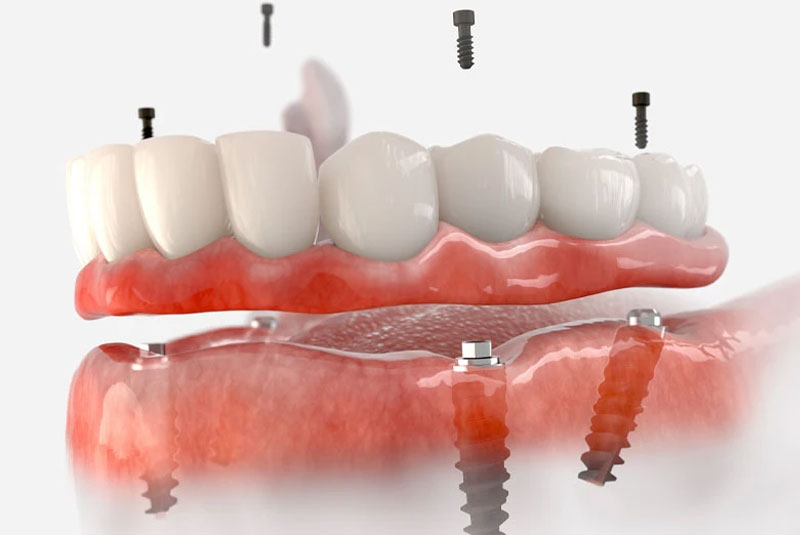
Dental implants replace missing teeth with fixed structures that attach to the jawbone. Different types of implants use components that work together to restore chewing surfaces and can provide long-term stability. These components include the implant post, the abutment, and the final restoration, which all function as one unit once fully assembled. The main differences between implant types relate to how many teeth they replace and how the supporting parts connect. Here is more information about the options used in many restorative plans and how these systems function within the mouth:
Single Implant
Single-tooth dental implants use a post placed in the jawbone as the foundation for one replacement tooth. The post is typically titanium or ceramic, and the surrounding bone gradually attaches to the surface through a natural bonding process, forming an anchor that holds the restoration in place. A custom porcelain or ceramic crown completes the restoration and matches the shape and shade of nearby teeth.
Abutments connect the crown to the implant post. Straight and angled versions help providers match the implant to the natural position of the jaw. These different shapes can make it easier to align the crown with neighboring teeth, even when bone contours vary.
Implant-supported Bridge
Implant-supported bridgesreplace several teeth in a row by anchoring the restoration to fewer posts. The number of implants depends on bone support and the length of the space. Providers select post locations that distribute pressure evenly across the bridge and can reduce strain on individual implants. Multi-unit abutments attach to the implants, creating a base for the bridge. This structure can distribute chewing forces across the supporting posts instead of placing pressure on the gums, which helps maintain comfort and function during regular use.
Implant-supported bridges have false teeth, called pontics, to fill the spaces between abutments and follow contours that allow brushing and cleaning around the bridge. Pontics are shaped to allow access for flossing tools so plaque does not accumulate at the gumline. Because the bridge is fixed, it stays in place during daily activities and does not rely on adhesive materials.
Full-arch Implant
Full-arch systems replace a complete row of upper or lower teeth using multiple implants. The number of posts varies based on bone quality and the design of the final prosthesis. Providers plan post placement to create a stable foundation that supports the entire arch. Fixed full-arch bridges attach directly to the supporting abutments and remain in place at all times. Removable full-arch options use bar or locator attachments that allow the prosthesis to connect securely and detach when needed.
Full-arch implants use durable materials such as titanium or ceramic. Each framework of implants supports the full arch and spreads chewing forces across several posts. The position of each implant and the shape of the framework maintain stability during long-term function and reduce stress on individual parts. These systems form a full chewing surface and create a consistent bite pattern across the arch.
Learn More About Dental Implants
Consult a dental professional to learn more about dental implants, including single-tooth, bridge, and full-arch systems. Each design replaces missing teeth and maintains stability during daily use. A dentist can help you determine which type of implant fits your needs and goals.
